Close Menu
  • Home
  • Entertainment
  • National
  • International
  • Tech
  • Politics
  • Sports
  • PMNI
  • More
    • Business
    • Culture
    • Education
    • History
    • Health
  • Featured
    • Fishe Travel
    • Fishe Media
    • Fishe TV
Facebook X (Twitter) Instagram
FISHE NEWS
  • Home
  • Entertainment
  • National
  • International
  • Tech
  • Politics
  • Sports
  • PMNI
  • More
    • Business
    • Culture
    • Education
    • History
    • Health
  • Featured
    • Fishe Travel
    • Fishe Media
    • Fishe TV
Facebook X (Twitter) Instagram
FISHE NEWS
Home»Worldwide»Pacific Northwest Faces Imminent Tsunami Risk
Worldwide

Pacific Northwest Faces Imminent Tsunami Risk

Omolemi EboisetaleBy Omolemi EboisetaleJune 18, 2024No Comments3 Mins Read
Facebook Twitter Pinterest LinkedIn Tumblr Email
Share
Facebook Twitter LinkedIn Pinterest Email

Scientists warn that a catastrophic earthquake and tsunami are inevitable for the Pacific Northwest coast.

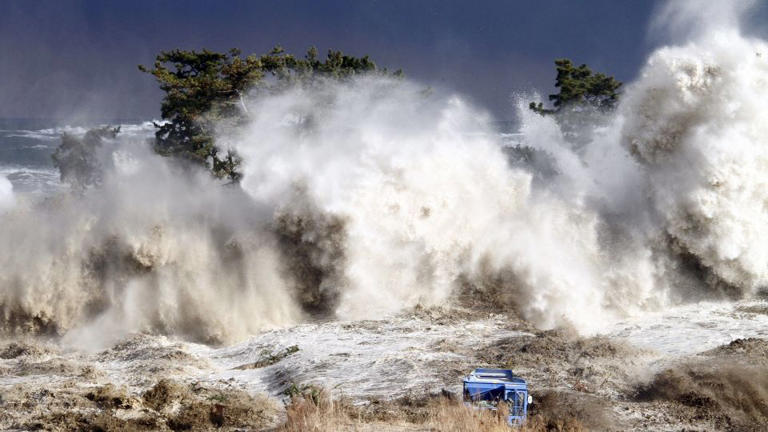
The Cascadia Subduction Zone, a 700-mile fault located 100 miles off the coast from Northern California to Vancouver Island, could trigger a 9.0 magnitude earthquake followed by a tsunami. This scenario mirrors the devastating 2011 earthquake and tsunami in Japan.

Diego Melgar, a seismologist at the University of Oregon, notes that 30 to 40 years ago, the possibility of such large earthquakes in the Pacific Northwest was unknown.

Recent studies, including in-depth imagery reported in “Science Advances,” reveal that the fault is divided into 3 to 5 segments, each with unique geological characteristics. The segment off Washington’s coast is particularly prone to triggering a devastating earthquake.



Corina Allen, the chief hazards geologist at the Washington Geological Survey, highlights that infrastructure built before 2005 is not designed to withstand such a strong earthquake.

Tsunami building codes were only implemented in 2016. This leaves critical facilities like bridges, hospitals, schools, and residential buildings vulnerable.

Yumei Wang, a senior adviser at Portland State University, is concerned about the slow pace of necessary preparations. The most vulnerable structures include brick and masonry buildings, as well as wood frame buildings susceptible to tsunami forces.

Historical records indicate that these mega earthquake and tsunami events occur approximately every 500 years. With the last event over 300 years ago, the next one could occur within the next 200 years or sooner.

Retrofitting existing communities will be a long and costly process, potentially reaching billions of dollars. Melgar insists this investment is essential for future safety, even if the benefits are seen by the next generations.

For residents and visitors of the coastal Pacific Northwest, survival depends on quickly reaching high ground within 15 to 30 minutes after an earthquake.

In many areas of Washington, high ground is not easily accessible. Vertical evacuation structures, which proved effective in Japan’s 2011 tsunami, are critical. Currently, only three such structures exist in the Pacific Northwest, with four more planned. Washington alone needs approximately 50 of these structures to ensure adequate safety.

Each vertical evacuation structure can hold 400 to 1,000 people, stands up to 76 feet tall, and costs vary significantly.

The most expensive is the $62 million Marine Sciences Center in Oregon, engineered to withstand a magnitude 9.0+ earthquake and subsequent tsunami.

Melgar stresses the importance of adopting and enforcing building codes, early warning systems, and tsunami evacuation plans to mitigate the disaster’s impact.

However, the willingness to invest billions in preparation for an event that might not occur for another 200 years remains uncertain.

Pacific Northwest Tsunami Risk
Share. Facebook Twitter Pinterest LinkedIn Tumblr Email
Omolemi Eboisetale
  • Website

Related Posts

Nigeria’s Permanent UN Security Council Bid: A Strong Case for Africa, But A Weak Case For Nigeria Alone

September 28, 2026

Fostering The Future Together: Advancing Global Technology And Education Partnerships For Children

September 22, 2026

U.S. Welcomes Appointment Of Luke J. Lindberg As WFP Executive Director

September 21, 2026

Comments are closed.

Here is spotlighting many benefits of journeying with either Lagos State’s Blueline or Redline rails for a hassle-free day, week, month and year. Thank God for the Igbega Eko. Together we rise.
https://youtu.be/V67GV8wgyjw

Latest Posts

  • Nigeria’s Data Needs To Return Home. But Is Our Infrastructure Up To The Task?
  • Nigeria Begins Local Production Of Next-Generation Malaria Nets As Harvestfield Opens New Front In Health Manufacturing
  • From Appropriation To Impact: What The 2025 Budget Extension Means For Citizens
  • Fuel Import Licence Ruling Opens New Front In Nigeria’s Battle Over Who Controls Petrol Supply
  • Nigeria’s Permanent UN Security Council Bid: A Strong Case for Africa, But A Weak Case For Nigeria Alone

LATEST POSTS

Nigeria’s Data Needs To Return Home. But Is Our Infrastructure Up To The Task?

October 4, 2026

Nigeria Begins Local Production Of Next-Generation Malaria Nets As Harvestfield Opens New Front In Health Manufacturing

October 2, 2026

From Appropriation To Impact: What The 2025 Budget Extension Means For Citizens

October 1, 2026

Fuel Import Licence Ruling Opens New Front In Nigeria’s Battle Over Who Controls Petrol Supply

September 30, 2026

Nigeria’s Permanent UN Security Council Bid: A Strong Case for Africa, But A Weak Case For Nigeria Alone

September 28, 2026

Subscribe to Updates

Get the latest news from FISHE about politics, economy, health and business, etc

Facebook X (Twitter) Instagram Pinterest
© 2026 ThemeSphere. Designed by ThemeSphere.

Type above and press Enter to search. Press Esc to cancel.