
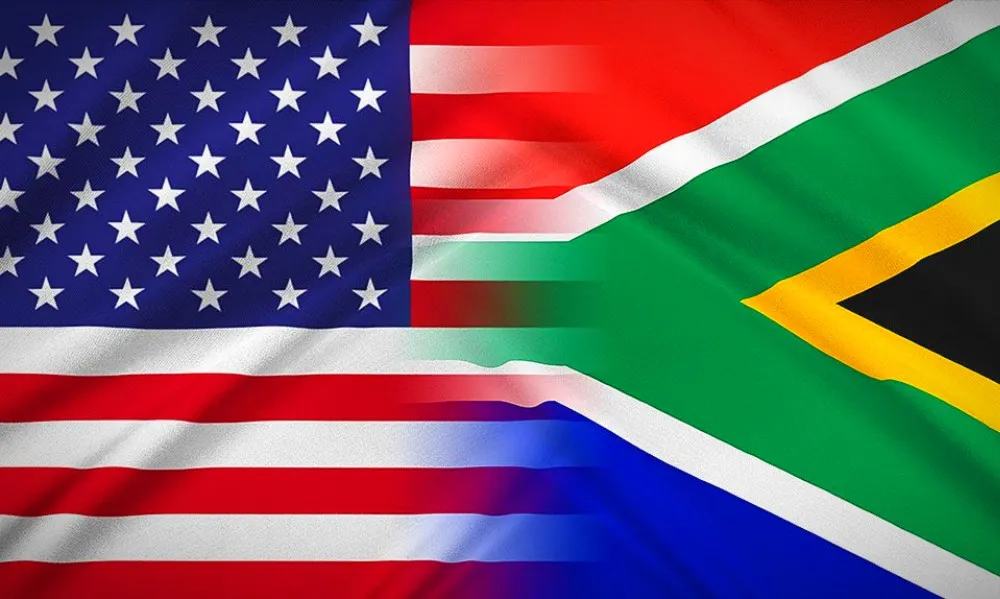
On September 15, 2026, U.S. Secretary of State Marco Rubio unveiled a new visa-restriction policy aimed at foreign nationals deemed responsible for or complicit in South African laws or policies that allow for uncompensated land seizures, promote race-based discrimination, or incite imminent violence against minority ethnic or racial groups.
This policy is being enacted under Section 212(a)(3)(C) of the U.S. Immigration and Nationality Act (INA), which permits visa denial if the Secretary of State believes that allowing an individual entry could lead to serious negative consequences for U.S. foreign policy.
This announcement marks a significant escalation in the ongoing policy dispute between the U.S. and South Africa. It directly builds on President Donald Trump’s Executive Order 14204 from February 7, 2025, which criticized South Africa’s land-expropriation practices, alleged discriminatory government actions, and other facets of its foreign policy.
Notably, the September 15 announcement lays out the framework for this policy but stops short of naming specific individuals who will face visa restrictions. It also lacks publicly available information regarding the standards of evidence or procedures that will be used to assess individual responsibility or complicity. These gaps are crucial for understanding how this policy will be applied in practice.

1. Nature of the Announcement
The policy focuses on three main areas of concern:
Uncompensated land seizures: This targets foreign nationals linked to laws or policies that the United States views as allowing land to be taken without compensation.
Race-based discrimination: This includes individuals who are either responsible for or complicit in creating or enforcing policies that the United States deems discriminatory based on race.
Incitement of imminent violence: This pertains to individuals associated with policies or actions that the United States identifies as inciting immediate violence against minority racial or ethnic groups.
So, this measure isn’t just a broad visa ban on South African citizens. Instead, it’s a tailored foreign-policy tool aimed specifically at foreign nationals that the United States identifies as fitting certain criteria.
This distinction is important because Section 212(a)(3)(C) has been used by the State Department in the past to impose targeted visa restrictions on individuals, rather than applying a sweeping ban based on nationality.
For instance, in 2023, the State Department utilised the same legal authority to restrict individuals it believed were undermining Nigeria’s democratic process.
Legal Basis
The legal authority in question is Section 212(a)(3)(C) of the Immigration and Nationality Act (INA). This provision allows the Secretary of State to decide that an individual is inadmissible if their entry or planned activities could lead to significant negative consequences for U.S. foreign policy. Additionally, the State Department has provided guidance on the procedures for visa refusals based on foreign policy concerns under this provision.
As a result, the executive branch has considerable leeway in assessing whether someone’s presence in the U.S. poses a potential foreign-policy issue.
Furthermore, the announcement made on September 15 mentions that certain family members might also be included. However, it doesn’t clarify which specific family relationships will be considered in individual cases.
Connection to Executive Order 14204
The new policy should be seen as a continuation of the administration’s approach to South Africa, rather than a standalone action.
On February 7, 2025, Executive Order 14204 was issued, highlighting concerns that South Africa’s Expropriation Act 13 of 2024 could allow the government to take agricultural land from ethnic-minority Afrikaners without any compensation. The order also pointed out what it called discriminatory practices in employment, education, and business, and it addressed the rhetoric and actions from the government that, according to the administration, have led to increased violence against landowners from marginalized racial groups.
Additionally, the executive order referenced South Africa’s foreign policy, including its legal actions against Israel at the International Court of Justice and its ties with Iran.
In September 2026, the announcement refined its immediate visa restrictions to focus on three key areas: land policy, racial discrimination, and the alleged incitement of imminent violence.
Policy Mechanism
This measure mainly works through immigration and visa implications rather than relying on economic sanctions.
Here’s how it’s likely to unfold:
First, the State Department will pinpoint actions, laws, or policies that fit the specified categories.
Next, officials will assess whether certain foreign nationals are either responsible for or complicit in those actions.
Then, they’ll invoke Section 212(a)(3)(C) to declare those individuals inadmissible.
As a result, visa applications or attempts to enter the country by these individuals could be impacted.
Additionally, some family members might also be subject to these restrictions.
It’s important to note that the announcement doesn’t imply that everyone involved in South Africa’s land or racial policy decisions will be automatically affected. Instead, the language emphasizes individuals who are “responsible for, or complicit in” the relevant laws or policies.
This distinction means that the actual scope of the policy will rely on future individual assessments.
What the Announcement Establishes — and What It Does Not
The United States has made a significant announcement regarding a new visa-restriction policy.
Here’s what you need to know:
– They’ve pointed to Section 212(a)(3)(C) as the legal basis for this move.
– Three main categories of conduct have been identified.
– It’s important to note that being responsible for or complicit in certain actions can lead to these restrictions.
– Additionally, some family members might also fall under this policy.
– This new policy is tied to the administration’s wider concerns about South Africa.
Not established in the announcement
The statement leaves out some important details, such as:
– the names of individuals who are currently under restrictions;
– how many people are affected;
– which specific South African laws or government officials will be the first to face scrutiny;
– what the evidentiary standard is for deciding on “complicity”;
– whether any restrictions have already been placed on certain individuals;
– how long these individual restrictions will last; and
– the exact extent of coverage for family members.
A recent report referencing the State Department’s release also highlights that no specific individuals were mentioned in the announcement.
These unanswered questions limit the ability to assess the immediate practical impact of the policy.
Diplomatic Significance
This announcement marks yet another step back in the already strained relationship between the U.S. and South Africa.
Washington is framing this policy mainly as a move to uphold foreign policy and the rule of law. The State Department contends that the actions in question threaten peace, economic stability, and the very foundation of legal order.
Additionally, this measure serves a signaling purpose. Unlike sweeping economic sanctions, which can impact entire economies, these visa restrictions specifically target the international travel of certain individuals. This approach not only limits their mobility but also sends a clear diplomatic message: the United States is willing to impose personal repercussions for actions it sees as misaligned with its foreign policy goals.
In essence, this policy merges immigration controls with a form of diplomatic pressure.
South African Policy Context
The main issue at hand revolves around land reform and the legal aspects of expropriation.
Executive Order 14204 pointed specifically to South Africa’s Expropriation Act 13 of 2024, labeling it as a law that allows for the uncompensated taking of property from Afrikaners.
However, it’s important to differentiate the U.S. perspective from the wider legal and political discussions happening within South Africa about land reform, property rights, historical injustices, and the constitutional rules that govern expropriation.
As a result, any analysis should be careful not to view the U.S. government’s take on South African policy as a definitive account of the complex domestic legal issues at play.
Potential Areas of Dispute
As the policy rolls out, several key issues are expected to come to the forefront.
Definition of “race-based discrimination”
The announcement falls short of clearly defining which specific South African laws or policies will be included. This is important because South Africa’s legal landscape is quite intricate, especially when it comes to tackling historical racial inequalities and implementing affirmative actions.
Figuring out which of these measures would be seen as prohibited race-based discrimination in the context of U.S. visa restrictions could require a lot of careful policy and legal analysis.
Definition of “complicity”
The phrase “responsible for, or complicit in” could refer to more than just those who directly create legislation. How the policy is eventually put into action will shed light on whether the United States is mainly targeting senior policymakers, legislators, administrators, political figures, or a broader audience.
“Imminent violence”
By including the term “imminent” when discussing violence, the policy sets itself apart from a blanket ban on offensive or inflammatory political speech. However, it’s still unclear what specific criteria the State Department will use to determine this.
Family-member restrictions
The statement mentions that certain family members might also be affected, which could lead to questions about how individual accountability ties into immigration consequences for those related to them.
Broader Foreign-Policy Implications
This measure shows how the United States can leverage immigration law as a tool for foreign policy, all without having to resort to a sweeping sanctions approach.
It also highlights a trend where the State Department has utilised Section 212(a)(3)(C) to go after individuals whose actions are seen as conflicting with U.S. foreign policy goals. For instance, a 2026 announcement from the State Department regarding the Great Lakes region similarly referenced Section 212(a)(3)(C) to target those accused of jeopardising regional stability.
Thus, the policy regarding South Africa aligns with a well-established U.S. strategy of using visa restrictions as a precise diplomatic instrument.
For South Africa, the key immediate concern will likely be figuring out which individuals are ultimately named and how this policy will play into ongoing bilateral tensions surrounding land reform, racial policies, and South Africa’s foreign relations.
Key Indicators to Monitor
To truly understand the policy’s reach, we need to keep an eye on a few key developments:
– The publication or announcement of the first designated individuals.
– The South African government’s official response.
– Any clarifications from the State Department regarding evidentiary standards.
– A clearer definition of what “complicity” actually means.
– Whether the restrictions apply beyond just senior government officials.
– If family members are also facing derivative restrictions.
– Any legal challenges that come up regarding individual visa decisions.
– Congressional oversight or reports related to Section 212(a)(3)(C) determinations.
– And finally, whether the United States decides to broaden the policy to include more sanctions or diplomatic actions.
According to the guidance from the State Department, visa refusals based on foreign policy under Section 212(a)(3)(C) must be reported to Congress. This could be one way to make the implementation of this policy a bit more transparent.
Conclusion
The September 15, 2026 new announcement rolled out a specific U.S. visa-restriction framework aimed at foreign nationals linked to certain South African policies and actions. This initiative is grounded in Section 212(a)(3)(C) of the Immigration and Nationality Act (INA), and it draws its political and diplomatic roots from the Trump administration’s broader approach to South Africa, particularly through Executive Order 14204.
The real significance of this announcement is more apparent at the policy level than for individuals. While Washington has outlined the types of behaviour it plans to target, the public statement falls short of naming the individuals who will face restrictions or detailing how decisions will be made on a case-by-case basis.
As a result, the next steps in implementing this policy—not just the announcement itself—will be crucial in determining its actual impact, the diplomatic fallout, and how it will affect South African officials, policymakers, and other foreign nationals.
For an analytical report, it’s essential to differentiate between what Washington has officially announced, what U.S. law permits, and what remains a matter of speculation or unresolved questions regarding implementation.
