
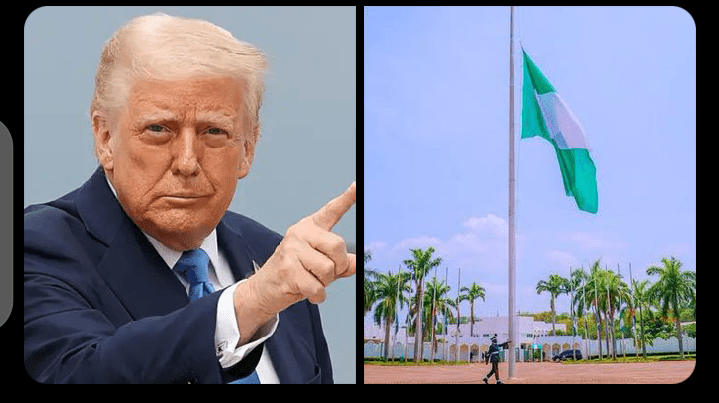
Trump Imposes 14% Tariff On Nigerian Exports As US Trade Policy Heats Up.
In a dramatic escalation of his administration’s trade policy, U.S. President Donald Trump has announced a 14% tariff on all Nigerian exports to the United States, effective immediately. The decision, unveiled during a White House Rose Garden address dubbed “Liberation Day” on 2 April, forms part of a broader strategy to address what Trump calls “unfair trade practices” and to bolster American industry.
The tariff targets Nigeria, one of Africa’s largest economies, which exported goods worth ₦931 billion (£1.7 billion) to the U.S. in 2024, with crude oil making up the lion’s share. In contrast, Nigeria imported ₦1.05 trillion (£1.9 billion) in goods from the U.S. during the same period. The Trump administration claims the move is a reciprocal response to Nigeria’s 27% tariff on American goods, aligning with a new policy framework that imposes duties on imports at half the rate foreign nations levy on U.S. exports.

Speaking to a gathered crowd, Trump declared, “For too long, countries like Nigeria have taken advantage of America. This ends now. We’re making trade fair again, supercharging our economy, and putting American workers first.” He held up a chart illustrating trade imbalances, pointing to Nigeria as one of over 50 nations facing new tariffs under his “Make America Wealthy Again” initiative.

The baseline tariff of 10% applies to all countries exporting to the U.S., with additional reciprocal rates—such as Nigeria’s 14%—tailored to specific trade relationships. The policy, which also includes a 25% tariff on foreign-made cars starting at midnight on 3 April, has sparked global concern about a potential trade war. Major economies like China (facing a 34% tariff) and the European Union (20%) are also affected, alongside smaller nations across Africa, Asia, and Latin America.
For Nigeria, the tariff could pose a significant challenge. While crude oil dominates its exports to the U.S., the country has been working to diversify its economy beyond hydrocarbons. Analysts suggest that the new duties may hinder these efforts, raising costs for Nigerian exporters and potentially reducing their competitiveness in the American market. However, some experts note that Nigeria could redirect its oil exports to other buyers, such as India or China, softening the blow.
The announcement has drawn mixed reactions. Supporters in the U.S. hail it as a bold step to protect domestic industries, while critics warn of higher prices for American consumers and strained international relations. In Nigeria, officials have yet to respond formally, but the move is likely to prompt discussions about retaliatory measures or negotiations to ease the tariff burden.
As the world watches, Trump’s tariff regime marks a sharp departure from decades of global free-trade norms. With the policy now in effect, its economic ripples are expected to be felt far beyond the shores of the United States and Nigeria.
More details are expected to emerge as affected nations assess their next steps in this unfolding trade saga.
