Close Menu
  • Home
  • Entertainment
  • National
  • International
  • Tech
  • Politics
  • Sports
  • PMNI
  • More
    • Business
    • Culture
    • Education
    • History
    • Health
  • Featured
    • Fishe Travel
    • Fishe Media
    • Fishe TV
Facebook X (Twitter) Instagram
FISHE NEWS
  • Home
  • Entertainment
  • National
  • International
  • Tech
  • Politics
  • Sports
  • PMNI
  • More
    • Business
    • Culture
    • Education
    • History
    • Health
  • Featured
    • Fishe Travel
    • Fishe Media
    • Fishe TV
Facebook X (Twitter) Instagram
FISHE NEWS
Home»National»Tinubu’s Aide Reveals How Journalists Pushed Out IBB And Abacha Regimes
National

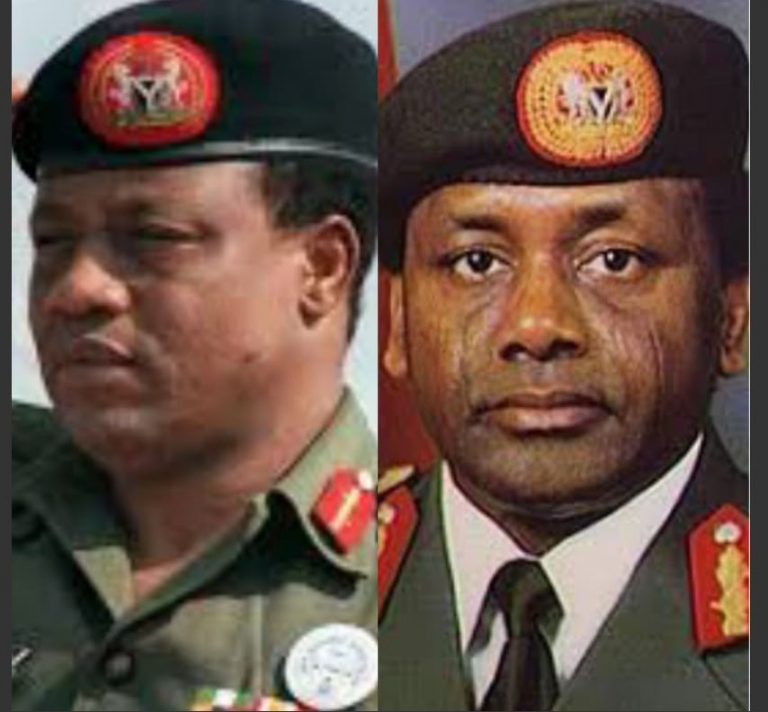
Tinubu’s Aide Reveals How Journalists Pushed Out IBB And Abacha Regimes

Omolemi EboisetaleBy Omolemi EboisetaleMarch 31, 2024No Comments3 Mins Read
Facebook Twitter Pinterest LinkedIn Tumblr Email
Share
Facebook Twitter LinkedIn Pinterest Email

Bayo Onanuga, Special Adviser to President Bola Tinubu on Information and Strategy, disclosed in a recent interview how journalists, including himself, played an important role in ending the military regimes of former dictators Ibrahim Babangida (IBB) and the late Sani Abacha.


Speaking on the ‘Mic On Podcast’ hosted by Channels TV presenter Seun Okinbaloye, Onanuga recounted their efforts during his time as an editor at the defunct African Concord magazine and later as the founder of TheNews magazine.



“Our journalism was centered on looking at people at the center point of issues rather than just looking at issues,” Onanuga stated. “We were fighting for democracy, for the rights of all Nigerians, and we were ready to lose our own convenience and everything to make sure that this country was well-governed.”


Reflecting on their stance against the military rule, Onanuga stated that instead of the military, it was better for them to have people who they will elect out of their own free will and not for soldiers because they have the guns to govern the people.


He recalled challenging Babangida’s regime and later Abacha’s, he stated their unbiased role in questioning authority and advocating for democracy.


“When Abacha took over and we found that he wasn’t ready to allow democracy to reign, we also began a new round of struggle, and when he died, we were very happy that he died,” Onanuga said.

He said “it was a people-centrered journalism that we were doing, so trying to focus on issues but focusing on them through the people who are in charge.


“Let’s say now, we have a problem of guinea worm like it used to happen in those days. We aren’t just looking at guinea worm as a disease, we’re looking at the people who are in charge of our health, people who are in charge of water and things like that, and we really began to question them.”


Onanuga also revealed his departure from African Concord magazine due to disagreements with his former boss, Chief MKO Abiola, over a publication titled ‘Has Babangida given up?’


He said, “What kind of leader was this?” he queried, adding that he said Babangida “had no business to govern Nigeria” if his measures were ineffective in developing the nation.


“Of course, he didn’t like what we did. And when my boss said I should apologise, I said no, there’s no point in apologising. I said I won’t apologise, I’ll rather just go,” he stated.


Onanuga added that upon leaving the media house, it degenerated into a chain of exits, saying, “And when I left, many of my colleagues also left with me.”


He noted that the exit led to the founding of TheNews magazine in 1993.


“If you believe very much in something, even at the risk of your life, it’s better you stick to it,” Onanuga said, when asked if he regretted his decision to apologize to Babangida despite pressure to do so, he said “It’s better to have some dignity.”


Onanuga noted that despite being perceived as a gentleman by most of the People who met him, his pen wielded a powerful force for change.

Bayo Onanuga Journalist
Share. Facebook Twitter Pinterest LinkedIn Tumblr Email
Omolemi Eboisetale
  • Website

Related Posts

Nigeria’s Data Needs To Return Home. But Is Our Infrastructure Up To The Task?

October 4, 2026

Nigeria Begins Local Production Of Next-Generation Malaria Nets As Harvestfield Opens New Front In Health Manufacturing

October 2, 2026

From Appropriation To Impact: What The 2025 Budget Extension Means For Citizens

October 1, 2026

Comments are closed.

Here is spotlighting many benefits of journeying with either Lagos State’s Blueline or Redline rails for a hassle-free day, week, month and year. Thank God for the Igbega Eko. Together we rise.
https://youtu.be/V67GV8wgyjw

Latest Posts

  • Nigeria’s Data Needs To Return Home. But Is Our Infrastructure Up To The Task?
  • Nigeria Begins Local Production Of Next-Generation Malaria Nets As Harvestfield Opens New Front In Health Manufacturing
  • From Appropriation To Impact: What The 2025 Budget Extension Means For Citizens
  • Fuel Import Licence Ruling Opens New Front In Nigeria’s Battle Over Who Controls Petrol Supply
  • Nigeria’s Permanent UN Security Council Bid: A Strong Case for Africa, But A Weak Case For Nigeria Alone

LATEST POSTS

Nigeria’s Data Needs To Return Home. But Is Our Infrastructure Up To The Task?

October 4, 2026

Nigeria Begins Local Production Of Next-Generation Malaria Nets As Harvestfield Opens New Front In Health Manufacturing

October 2, 2026

From Appropriation To Impact: What The 2025 Budget Extension Means For Citizens

October 1, 2026

Fuel Import Licence Ruling Opens New Front In Nigeria’s Battle Over Who Controls Petrol Supply

September 30, 2026

Nigeria’s Permanent UN Security Council Bid: A Strong Case for Africa, But A Weak Case For Nigeria Alone

September 28, 2026

Subscribe to Updates

Get the latest news from FISHE about politics, economy, health and business, etc

Facebook X (Twitter) Instagram Pinterest
© 2026 ThemeSphere. Designed by ThemeSphere.

Type above and press Enter to search. Press Esc to cancel.