
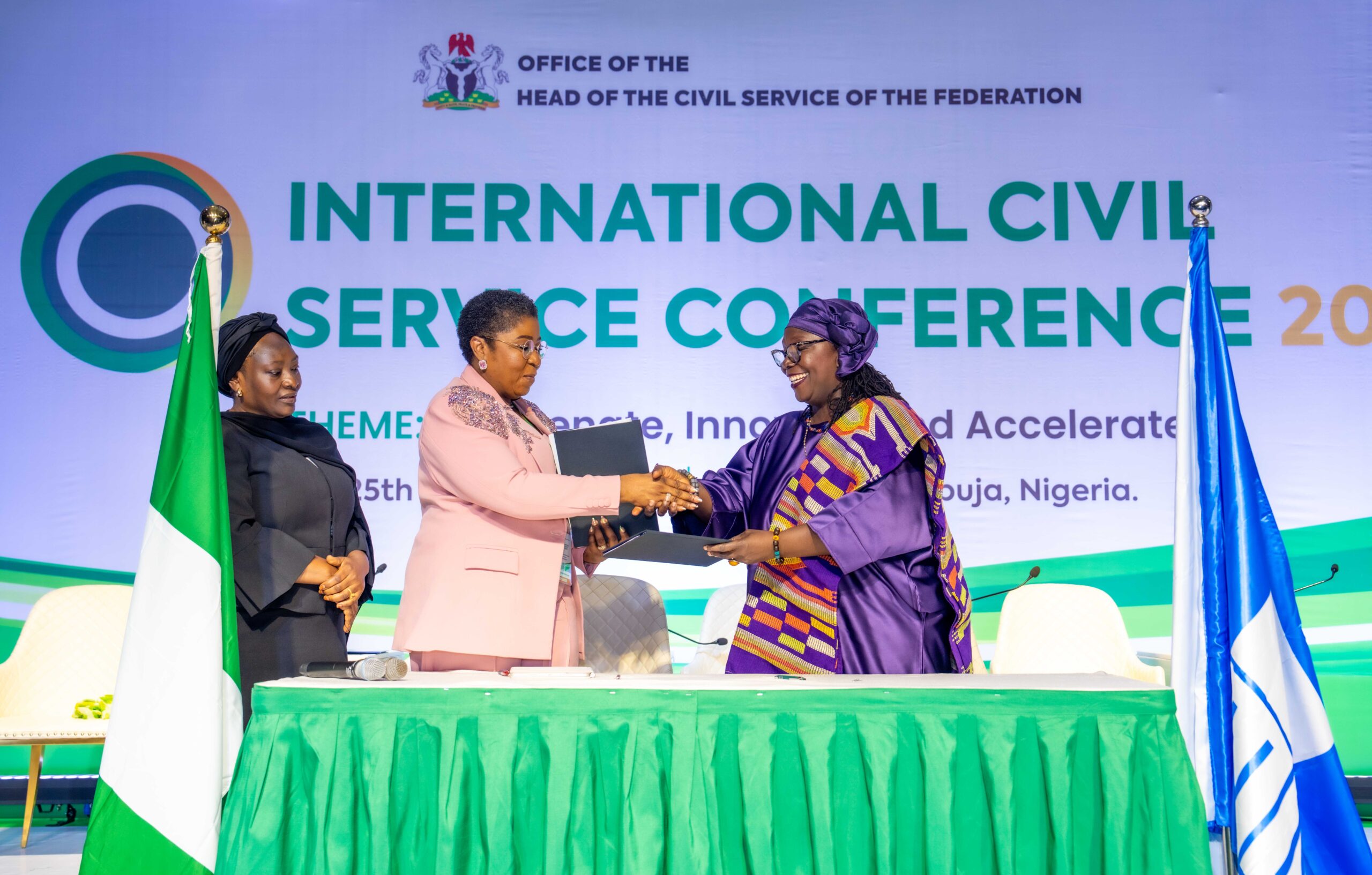
In a significant step toward overhauling public service operations, the Office of the Head of the Civil Service of the Federation (OHCSF) of Nigeria has launched a series of transformative policies and initiatives aimed at repositioning the federal civil service for enhanced efficiency, accountability and digital‑readiness.
The reforms are part of the broader Federal Civil Service Strategy and Implementation Plan 2021‑2025 (FCSSIP 25), and align with the government’s “Renewed Hope” agenda under the President Bola Ahmed Tinubu’s administration.
Key Policies and Frameworks
-
The reforms include the following four foundational policies recently unveiled by the Head of Service, Didi Esther Walson‑Jack:
-
A Rewards & Recognition Policy and Guidelines to formally incentivise exceptional performance in the federal civil service.

-
An Incentives & Consequence Management Policy and Guidelines, designed to embed accountability by recognising good conduct and sanctioning non‑performance or misconduct.
-
A Mentoring Framework, aimed at nurturing talent, supporting career development and embedding continuous learning among civil servants.
-
A Protocol on the Use of Federal Government Secretariat, which sets standards for usage of space, behaviour, resource‑utilisation and aligns administrative conduct with modern expectations.
-
-
These policies are embedded in the existing Public Service Rules (2021), and form part of the FCSSIP 25 architecture. The aim is to shift organisational culture, embed performance orientation, and reposition the civil service as a professional, efficient and citizen‑centred institution.
Digitalisation and Data‑Driven Reform
A second major strand of the reform is the drive toward digital transformation and data integrity across the federal civil service.
-
The government has committed to a fully digitised, paperless federal civil service by December 2025, signalling a decisive shift from manual processes to electronic, cloud‑based operations.
-
Central to this effort is the rollout of “GovMail” (official government emails for civil servants), migration of records to the 1‑GOV cloud platform, and inter‑operable systems among ministries and agencies to ensure secure, efficient communication and service delivery.
-
Further, the government is implementing a comprehensive Personnel Audit and Skills Gap Analysis (PASGA), for all ministries, departments and agencies (MDAs). This data‑driven exercise is designed to clean up personnel records, identify capacity‑gaps and enable evidence‑based workforce planning and deployment.
Institutional Partnerships & Innovation
These reforms are not being pursued in isolation. Key partnerships and institutional interventions are underway:
-
The OHCSF signed a landmark Memorandum of Understanding (MoU) with the United Nations Development Programme (UNDP) to accelerate public sector innovation, digital capacities and institutional reform across Nigeria’s public service.
-
Part of the strategy involves establishing a “Public Sector Innovation Hub”, launching digital skills programmes for civil servants, and leveraging global knowledge exchange to raise Nigeria’s public service to international standards.
Why This Matters
These reforms represent a fundamental shift in how Nigeria’s federal civil service operates. Some of the key reasons this matters are:
-
Efficiency and Responsiveness: By digitilising operations and cleaning up personnel records, the civil service can respond faster to citizens, reduce delays, and improve transparency.
-
Accountability and Culture Change: Incentives, consequence management, mentoring – these mechanisms encourage performance, discourage slackness and build a culture of public service excellence.
-
Human‑Capital Optimisation: The skills‑gap audit and mentoring frameworks ensure that manpower is better aligned with roles, enhancing the quality and relevance of the workforce.
-
Innovation‑Driven Public Service: Partnerships like with UNDP and the use of digital tools signal an intent to leapfrog into an agile, globally competitive public service paradigm.
-
Alignment with National Development Goals: The reforms dovetail with the Renewed Hope Agenda and help ensure the civil service is the engine of governance rather than a bottleneck.
Possible Challenges & Considerations
While the intent is strong and welcoming, there are practical considerations to monitor:
-
Implementation Across MDAs: The federal civil service is vast and heterogeneous. Ensuring ministries and agencies adopt these policies uniformly will require strong oversight.
-
Funding and Infrastructure: Digitisation, training, cloud migration – all these require adequate funding, infrastructure and change‑management capacity.
-
Change‑Management and Culture: Repositioning organisational culture is often harder than introducing policies. Sustained leadership, communication and buy‑in will be crucial.
-
Data‑Security and Privacy: With digitalisation comes the risk of cyber‑security breaches, data misuse. Strong governance around data protection will be essential.
-
Monitoring and Evaluation: To verify that the policies translate into improved service delivery, robust M&E frameworks must be instituted.
Looking Ahead
As our dear Nigeria heads toward December 2025 under President Bola Ahmed Tinubu, the planned date for full digitisation of the civil service—the next 12–18 months will be critical. Success will require:
-
Strong leadership from OHCSF and cooperating MDAs to drive uptake of the four new policies and digital tools.
-
Clear indicators of success: e.g., reduction in processing time, improved customer satisfaction, fewer lost files and better civil servant performance metrics.
-
Sustained investment in training and infrastructure so that civil servants are competent in using new digital systems.
-
Transparent communication with citizens to track and hold government to these reforms.
-
Continuous review and adaptation to ensure that the strategy remains relevant as technology and citizen expectations evolve.
As I wrap up, the federal government’s approval of these transformative policies marks a pivotal moment for Nigeria’s civil service. If implemented effectively, the reforms have the potential to create a modern, agile, accountable and citizen‑centred public service, capable of supporting national development in the 21st century.
With the right leadership, resourcing and commitment, the vision of a world‑class civil service is within reach.
Source: UNDP
