
The rules of marriage exist in different forms and manners in all of society.
Thus, “for better or worse” has a series of understandings in different cultures across the globe.
In a remote area of Papua, New Guinea, and Wamena of the Jayawijaya Regency in Indonesia, one of the binding facts of “till death do us part” and family ties involves the cutting off of the fingers, primarily done by women and sacresly by men.
However, it is not known when the practice called “Ikipalin” first began or why women are the primary participants in this culture.

An American explorer, Richard Archbold claimed to have spotted the 250,000-person tribe during a flight over the region in 1938. The tribe is located deep within Western New Guinea’s highlands.
Dressing
Early in the 1970s, the Indonesian government initiated “Operation Koteka,” sometimes known as Operation Penis Sheath, to modernise the Dani by promoting the wearing of shorts.
They still dress in eye-catching attire despite the failure of the strategy.

DANI VILLAGE, WAMENA, IRIAN JAYA, NEW GUINEA, INDONESIA, 4 JUNE 2016: Papuan Headhunters of Dani tribe. Men, armed with spears and arrows surrounded the tourist. Bottom view. Baliem Valley, New Guinea; Shutterstock ID 599900909
The koteka was said to have been worn as a sign of sexual prowess and was typically crafted from a dried-out gourd, a native fruit. The Dani, however, merely use it to conceal themselves.
A photographer, Han Lin, visited Papua New Guinea in 2016 and spent four days interacting with and documenting the Dani people. His private images display tribesmen donning “kotekas,” or penis sheaths, a customary article of attire.
The death of a dear one brings a rush of emotions, where grief is emotional suffering.
However, for women of the Dani tribe, the emotional grief does not end there but is merged with bodily and physical suffering.Ikipalin sees the fingers of women being cut off, which symbolises the grief brought by the death of a loved one.
The finger cutting is done with the belief of what the fingers represent to the tribe. The fingers in the Dani tribe mean unity and strength. As the fingers unite and work together, the inability to function properly with some missing fingers represents the hollow and diminishing strength of the family.
Ikipalin is a typical ritual that occurs during the grieving process and is typically carried out by another close relative.
The tribes’ belief in belief in ritualistically finger cutting is thought to keep the agitated spirit of the deceased at bay and to symbolise the sorrow of bereavement. Some female babies are not spared this practice, as some mothers bite their children’s fingers in the belief that it constricts their ways of life. Such perceptions also include that they would stand out from the crowd, or that if a mother bit their child’s fingers, it would extend their lifespan.
Despite that, it is mostly older ladies who get their fingers severed.
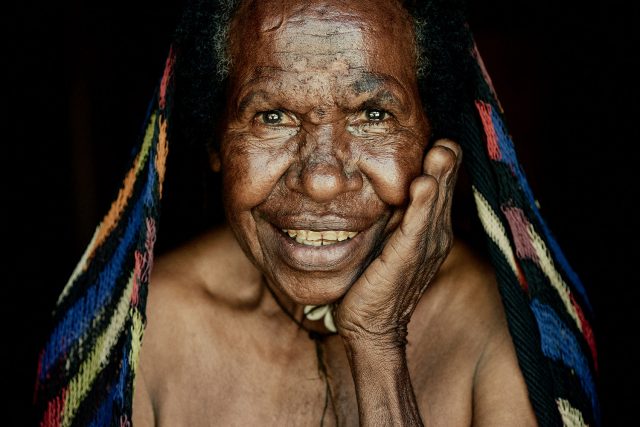
Although the practice was stopped years ago by the Indonesian government, many older female tribe members are walking relics with their mutilated fingers and hands. However, it’s believed that this unusual practice of finger amputation still goes on behind closed doors.
The Amputation Process
The top of a finger is frequently amputated using a stone blade. However, amputations can sometimes be performed without the use of equipment. In these situations, people weaken the knuckles by chewing on them before cutting off circulation with a piece of rope wrapped around the finger.
The nerves and muscles die from lack of oxygen, and the dying portion of both the fingers falls off. Another alternative is to link up the joints to stop blood flow to the area. Following the removal of the finger, the open wound is cauterised to halt bleeding, and the detached portion is either burned or interred in a significant place.

Dani tribe
In ancient times, sharp stones were used to forcefully break the phalanx.
The nerves and muscles die from lack of oxygen, and the dying portion of both the fingers falls off. Another alternative is to link up the joints to stop blood flow to the area.
The cutting is often done by family members, siblings, or parents. To further express their grief, the Dani people covered their faces in ashes and clay.
Some people cut off the ears as well, while other options included smearing themselves in the river sludge for a week without taking a bath. This means that the dead have returned to nature.
