
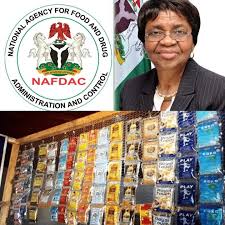
There is a brewing tension between public-health authorities and industry groups over the planned prohibition of alcoholic beverages packaged in sachets and small bottles (below 200 ml). On one side, the regulatory body, NAFDAC, says the move is necessary to curb alcohol misuse; on the other, the industry warns of large economic fallout if the ban is enforced.
The Ban: What it Entails
In November 2025, NAFDAC reiterated that the ban on production, distribution and sale of alcoholic drinks in sachets and small bottles will take full effect by December 31, 2025, with enforcement beginning January 2026.
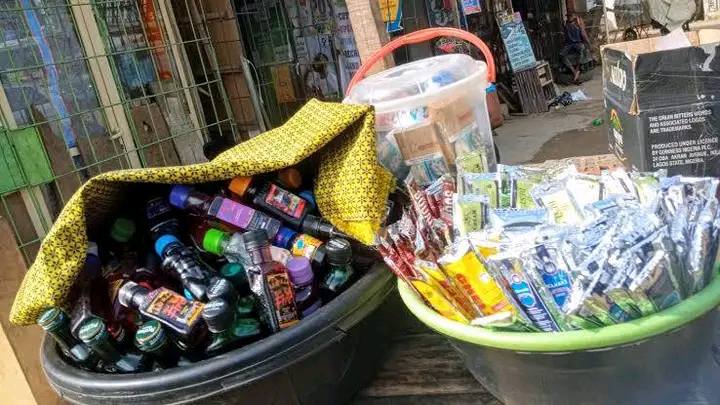
The agency argues that such packaging is “cheap, portable and concealable,” making it easily accessible to minors and commercial drivers, thereby contributing to misuse and related social harms. The Senate of the Federal Republic of Nigeria has also backed the measure, passing a resolution directing NAFDAC to enforce the ban and not extend the deadline.
NAFDAC cited its obligation to uphold the country’s commitments under the World Health Organization (WHO), global strategy to reduce harmful alcohol use, and referenced earlier agreements with industry stakeholders to phase out sachet/small-bottle formats.

The Industry Push-back
However, the Manufacturers Association of Nigeria (MAN), and the Distillers and Blenders Association of Nigeria (DIBAN), are pushing back hard. They argue that the ban threatens massive investments, employment and economic value. Simply put:
-
MAN warns that over ₦1.9 trillion (Nigerian naira), in investments are at risk, and more than five million direct and indirect jobs could be jeopardised if the ban is enforced as currently drafted.
-
Industry stakeholders say the packaging was deliberately designed to serve low-income adult consumers who want affordable portions; banning small formats might drive them toward illicit, unregulated products instead.
-
They also claim that empirical studies do not support the assertion that sachet/small-bottle formats are a primary driver of under-age drinking or substance abuse, contrary to NAFDAC’s position.
Given these concerns, the industry is asking the government to reverse the ban (or at least suspend it), and adopt a regulation-rather-than-prohibition framework, focusing on responsible production, access control, consumer education and stricter enforcement of age limits.
Public-Health Perspective
From the regulator’s viewpoint, the context is sobering: small-format alcoholic drinks are seen as enabling easier consumption by minors, commercial drivers and others who might abuse them because of their affordability and ease of concealment. NAFDAC has linked this to elevated risks of alcohol-related disease, accidents, violence and school drop-outs.
The phased ban process dates back to 2018, when NAFDAC and other stakeholders signed a Memorandum of Understanding (MoU), to gradually phase out the format by January 2024; this was later extended to December 2025 to allow industry adjustment.
Economic and Social Trade-offs
The debate encapsulates a classic public-policy dilemma: balancing public health protection with economic livelihoods and industry interests. On one hand, the regulatory goal is to protect vulnerable groups—and arguably the long-term societal costs of alcohol abuse may be large. On the other hand, the economic cost of abrupt prohibition might be equally large, especially for workers, downstream suppliers, and informal markets.
There Are Also Risk Factors On Both Sides:
-
If the ban is enforced without adequate transition, manufacturers warn of job losses, investment abandonment, and growth of illicit unregulated markets.
-
If the ban is not enforced, regulatory credibility may erode, and public health harms may persist.
What Next?
With the December 2025 deadline approaching, key questions remain:
-
Will the government grant another extension (as some in industry hope), or will it proceed with enforcement as scheduled? The Senate has indicated no further extensions.
-
How will the transition be managed to minimise job losses and ensure that consumers are not pushed into unregulated substitutes?
-
What complementary measures (education campaigns, affordable safer alternatives, enforcement of under-age purchase laws), will accompany the ban?
-
How will the revenue and tax implications of the industry changes play out in a country that heavily depends on informal sectors and manufacturing for employment?
Conclusion
The contested policy around alcohol in sachets and small bottles in Nigeria offers a microcosm of broader debates: public health vs. economic freedom, regulation vs. prohibition, formal industry vs. informal markets. How the government, industry and civil society resolve this will have implications not only for the manufacturing sector, but for Nigeria’s regulatory regime, health outcomes and economic well-being.
