Close Menu
  • Home
  • Entertainment
  • National
  • International
  • Tech
  • Politics
  • Sports
  • PMNI
  • More
    • Business
    • Culture
    • Education
    • History
    • Health
  • Featured
    • Fishe Travel
    • Fishe Media
    • Fishe TV
Facebook X (Twitter) Instagram
FISHE NEWS
  • Home
  • Entertainment
  • National
  • International
  • Tech
  • Politics
  • Sports
  • PMNI
  • More
    • Business
    • Culture
    • Education
    • History
    • Health
  • Featured
    • Fishe Travel
    • Fishe Media
    • Fishe TV
Facebook X (Twitter) Instagram
FISHE NEWS
Home»International»“None Of Us Can Change Our History”: King Charles Calls For Justice And Reflection At Commonwealth Summit
International

“None Of Us Can Change Our History”: King Charles Calls For Justice And Reflection At Commonwealth Summit

Adejuyigbe FrancisBy Adejuyigbe FrancisOctober 25, 2024No Comments3 Mins Read
Facebook Twitter Pinterest LinkedIn Tumblr Email
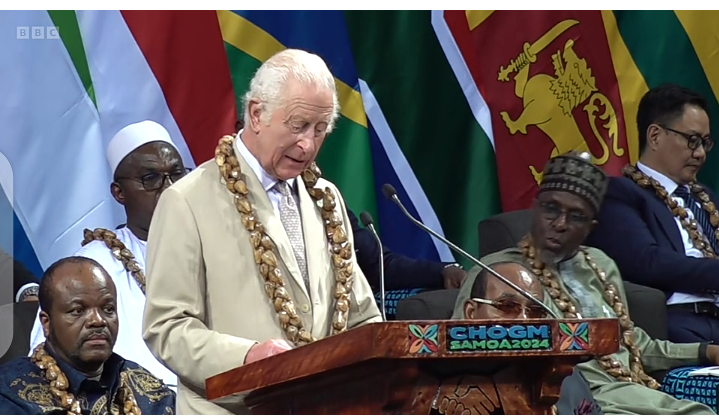
King Charles III addresses the Commonwealth Summit in Samoa 2024
Share
Facebook Twitter LinkedIn Pinterest Email

“None Of Us Can Change Our History”: King Charles Calls For Justice And Reflection At Commonwealth Summit.

In his inaugural address as head of the Commonwealth, King Charles emphasised the importance of recognising historical injustices, saying, “None of us can change our history.” Addressing leaders from the 56-member Commonwealth at the biennial summit in Samoa, he acknowledged the painful aspects of the past, while urging unity and reflection to foster a more equitable future.

King Charles III addresses the Commonwealth Summit in Samoa 2024

The King encouraged leaders to learn from history, proposing that they find “creative ways to right inequalities that endure.” Although he did not directly address the topic of slavery, his comments have ignited discussions on reparatory justice. Several Commonwealth leaders, especially from the Caribbean, are expected to press for conversations on reparations for Britain’s role in the transatlantic slave trade.



Despite Downing Street’s assurance that reparations would not be part of the official agenda, diplomatic sources reveal that many heads of state feel it is time for a “meaningful, truthful and respectful conversation” on the legacy of slavery. According to a draft summit communique obtained by the BBC, leaders agreed that addressing this past injustice is essential to “forging a common future based on equity.”


Prime Minister Sir Keir Starmer commented on the issue, describing slavery as “abhorrent” and advocating for open discussions on historical issues, yet highlighted the need to focus on “today’s challenges,” including climate change and Commonwealth trade. Chancellor Rachel Reeves reiterated that the UK government would not be making reparation payments, a stance that may prompt further debate.


Locals in Samoa expressed a range of opinions. Amanda Taavaomaalii, a teacher, noted that many people view these issues as “already in the past.” In contrast, Pisa Pisa Imoamoa, also a teacher, welcomed the summit’s potential to stimulate Samoa’s economy and provide small island nations with a voice on climate change, an issue disproportionately impacting their communities.


The King further underlined the urgency of climate action, stressing that it is “already undermining the development gains we have long fought for.” As he urged the Commonwealth to address climate change head-on, he made it clear that historical awareness and global justice should be guiding principles in shaping a shared future.


By invoking the unchangeable nature of history, King Charles has set a reflective tone for this year’s summit, inspiring discussions about justice, sustainability, and the path forward for the Commonwealth’s diverse member nations.

#commonwealth #King Charles III
Share. Facebook Twitter Pinterest LinkedIn Tumblr Email
Adejuyigbe Francis
  • Website

Thought Leader, Idea Bank, Nation Builder.

Related Posts

Nigeria’s Data Needs To Return Home. But Is Our Infrastructure Up To The Task?

October 4, 2026

Nigeria Begins Local Production Of Next-Generation Malaria Nets As Harvestfield Opens New Front In Health Manufacturing

October 2, 2026

From Appropriation To Impact: What The 2025 Budget Extension Means For Citizens

October 1, 2026

Comments are closed.

Here is spotlighting many benefits of journeying with either Lagos State’s Blueline or Redline rails for a hassle-free day, week, month and year. Thank God for the Igbega Eko. Together we rise.
https://youtu.be/V67GV8wgyjw

Latest Posts

  • Nigeria’s Data Needs To Return Home. But Is Our Infrastructure Up To The Task?
  • Nigeria Begins Local Production Of Next-Generation Malaria Nets As Harvestfield Opens New Front In Health Manufacturing
  • From Appropriation To Impact: What The 2025 Budget Extension Means For Citizens
  • Fuel Import Licence Ruling Opens New Front In Nigeria’s Battle Over Who Controls Petrol Supply
  • Nigeria’s Permanent UN Security Council Bid: A Strong Case for Africa, But A Weak Case For Nigeria Alone

LATEST POSTS

Nigeria’s Data Needs To Return Home. But Is Our Infrastructure Up To The Task?

October 4, 2026

Nigeria Begins Local Production Of Next-Generation Malaria Nets As Harvestfield Opens New Front In Health Manufacturing

October 2, 2026

From Appropriation To Impact: What The 2025 Budget Extension Means For Citizens

October 1, 2026

Fuel Import Licence Ruling Opens New Front In Nigeria’s Battle Over Who Controls Petrol Supply

September 30, 2026

Nigeria’s Permanent UN Security Council Bid: A Strong Case for Africa, But A Weak Case For Nigeria Alone

September 28, 2026

Subscribe to Updates

Get the latest news from FISHE about politics, economy, health and business, etc

Facebook X (Twitter) Instagram Pinterest
© 2026 ThemeSphere. Designed by ThemeSphere.

Type above and press Enter to search. Press Esc to cancel.