
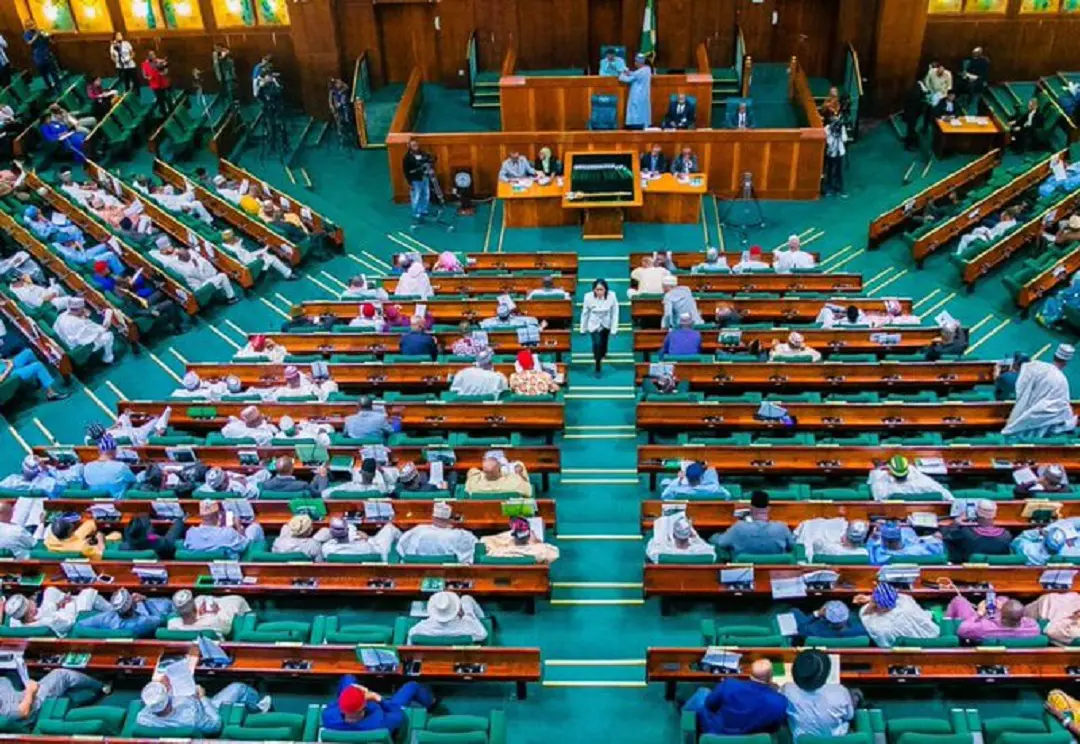
The National Assembly has formally approved the request by President Bola Ahmed Tinubu to raise ₦1.15 trillion from the domestic debt market to help finance the unfunded portion of the 2025 federal budget.
Background
In early November 2025, President Tinubu submitted a letter to both chambers of the National Assembly requesting approval of additional domestic borrowing. According to the letter:
-
The approved 2025 budget stands at ₦59.99 trillion, representing an increase of about ₦5.25 trillion above the Executive’s original proposal of around ₦54.74 trillion.
-
The budgetary deficit is estimated at about ₦14.10 trillion, with the original borrowing provision in the budget set at ₦12.95 trillion, leaving an unfunded gap of roughly ₦1.147 trillion.

-
Hence the request for the extra domestic borrowing to “close the unfunded deficit gap.”
The request was made pursuant to the provisions of the Fiscal Responsibility Act, 2007 (Section 44 (1-2)), which requires legislative approval for new borrowings by the Federal Government.
What the National Assembly Did
On 12 November 2025, the Senate adopted the report of the Senate Committee on Local and Foreign Debt (presented by Senator Manu Haruna), and approved the domestic borrowing of ₦1.15 trillion.
Key stipulations attached to the approval include:
-
The borrowing must be executed strictly within approved fiscal parameters.
-
The Debt Management Office (DMO), and the Ministry of Finance, Budget & National Planning must provide quarterly reports on the status, utilisation, repayment plans and compliance with debt-sustainability thresholds.
-
The borrowing must be used strictly for the purpose of closing the unfunded deficit in the 2025 Appropriation Act
The House of Representatives had earlier approved a separate plan for external borrowing (US$2.35 billion), and a debut sovereign Sukuk of US$500 million, both aimed at partially financing the 2025 budget deficit.
Significance & Implications
1. Closing the Funding Gap
The approval reflects an attempt by the executive and legislature to plug the shortfall created by the increase in the budget size and the borrowing limit originally approved. Without this additional borrowing, the budget risked partial implementation or stalled projects.
2. Debt Trajectory Concerns
While the additional borrowing may shore up funding for 2025, it raises questions about Nigeria’s debt sustainability. Domestic borrowing adds to the government’s liabilities, and strict oversight will be required to ensure the funds do not become misallocated.
3. Priority on Implementation
The National Assembly’s directives—requiring quarterly reporting, oversight and strict usage—signal growing legislative insistence on accountability and efficient utilisation of borrowed funds. If fully enforced, this could mark a positive shift in fiscal governance.
4. Market and Macroeconomic Implications
Domestic borrowing of this scale can influence interest rates, crowd out private sector credit, and affect inflation. The government will need to manage these risks carefully alongside broader macroeconomic pressures such as currency stability and low oil revenues.
Challenges & Watch-Points
-
Utilisation of Funds: Ensuring the ₦1.15 trillion is deployed in line with budget priorities and not diverted elsewhere remains critical.
-
Repayment Capacity: With multiple borrowing tranches (domestic and external), the cost of debt servicing may rise, potentially crowding out other spending.
-
Transparency and Oversight: While the legislative resolutions are clear, actual enforcement and monitoring will test institutional capacity.
-
Underlying Revenue Shortfall: The budget increase but borrowing still indicates the government is operating with narrow revenue margins—raising concerns about revenue base, oil volatility, and dependence on borrowing.
Conclusion
The approval by the National Assembly of President Bola Tinubu’s request for ₦1.15 trillion in additional domestic borrowing addresses a clear funding gap in the 2025 budget. It reflects coordination between the executive and legislature to ensure budget implementation. However, it also underscores the ongoing challenge of balancing ambitious public spending, revenue constraints and debt sustainability in Nigeria’s fiscal framework.
For the policy to deliver real benefits, stringent oversight, transparency in fund deployment, and meaningful improvement in revenue mobilisation are imperative. Only then will the borrowed funds translate into developmental outcomes rather than increased debt burden.
