Close Menu
  • Home
  • Entertainment
  • National
  • International
  • Tech
  • Politics
  • Sports
  • PMNI
  • More
    • Business
    • Culture
    • Education
    • History
    • Health
  • Featured
    • Fishe Travel
    • Fishe Media
    • Fishe TV
Facebook X (Twitter) Instagram
FISHE NEWS
  • Home
  • Entertainment
  • National
  • International
  • Tech
  • Politics
  • Sports
  • PMNI
  • More
    • Business
    • Culture
    • Education
    • History
    • Health
  • Featured
    • Fishe Travel
    • Fishe Media
    • Fishe TV
Facebook X (Twitter) Instagram
FISHE NEWS
Home»Business»Naira Ranked Among Africa’s Weakest Currencies Again
Business

Naira Ranked Among Africa’s Weakest Currencies Again

Omolemi EboisetaleBy Omolemi EboisetaleSeptember 28, 2025No Comments2 Mins Read
Facebook Twitter Pinterest LinkedIn Tumblr Email
Share
Facebook Twitter LinkedIn Pinterest Email

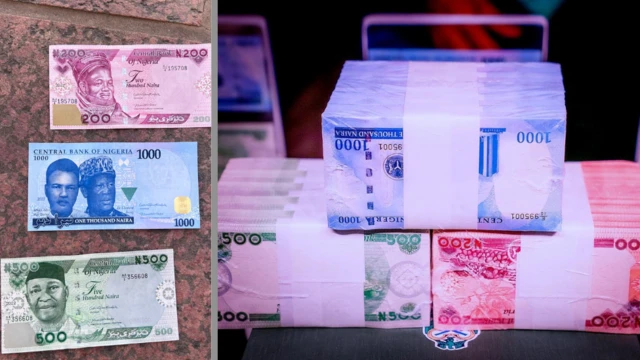
The Nigerian Naira has been ranked as the ninth weakest currency in Africa, according to Forbes’ currency calculator report for September 2025.

The report highlights the lingering strain on Nigeria’s economy despite recent signs of easing inflation. As of September 2025, the Naira trades at ₦1,490 per US dollar.

The Forbes currency calculator sources real-time foreign exchange market data via the Open Exchange Rates API, updating every five minutes to reflect live trading values. This system captures the impact of demand and supply, market sentiment, and broader economic conditions on each nation’s currency performance.

Other weak currencies in Africa include the Congolese Franc, Tanzanian Shilling, Malawian Kwacha, and Rwandan Franc, with exchange rates of 2,811, 2,465, 1,737, and 1,448 per US dollar, respectively. In contrast, the Tunisian Dinar, Libyan Dinar, Moroccan Dirham, Ghanaian Cedi, and Botswanan Pula are the strongest currencies in Africa, with exchange rates of 2.90, 5.40, 9.91, 12.31, and 14.15 per US dollar, respectively.



According to Dr. Omoniyi Akinsiju, chairman of the Independent Media and Policy Initiative, “Nigeria recorded a rare disinflation in 2025, with inflation falling from 24.5% in January to 20.12% in August, the sharpest mid-year slowdown in over a decade.” The slowdown in inflation is attributed to stable foreign exchange inflows from oil exports and diaspora remittances, improved agricultural yields, and sustained monetary policies by the Central Bank of Nigeria, which maintained the benchmark interest rate at 27.5%.

The National Bureau of Statistics reported that Nigeria’s headline inflation eased from 24.5% in January to 20.12% in August 2025, marking the fifth consecutive month of decline. IMPI forecasts that inflation could drop further to 17% by December 2025, signalling continued disinflation and providing relief for households and businesses.

Experts say Nigeria’s placement on the continent’s weakest currency list underscores the urgent need for sustained reforms in foreign exchange management, production, and investment inflows to restore long-term confidence in the Naira. “We forecast that inflation could drop to 17% by December 2025, signalling continued disinflation and easing pressure on consumers,” Dr. Akinsiju added.

The ranking is based on real-time data and reflects the current economic conditions in Nigeria and other African countries. With 54 recognised countries in Africa, according to the United Nations, the performance of the Naira and other currencies will continue to be closely watched by economists and investors.


Africa Currency Economic Forbes ForeignExchange. Inflation Naira Reforms Report Weakest
Share. Facebook Twitter Pinterest LinkedIn Tumblr Email
Omolemi Eboisetale
  • Website

Related Posts

Nigeria’s Data Needs To Return Home. But Is Our Infrastructure Up To The Task?

October 4, 2026

Nigeria Begins Local Production Of Next-Generation Malaria Nets As Harvestfield Opens New Front In Health Manufacturing

October 2, 2026

From Appropriation To Impact: What The 2025 Budget Extension Means For Citizens

October 1, 2026

Comments are closed.

Here is spotlighting many benefits of journeying with either Lagos State’s Blueline or Redline rails for a hassle-free day, week, month and year. Thank God for the Igbega Eko. Together we rise.
https://youtu.be/V67GV8wgyjw

Latest Posts

  • Nigeria’s Data Needs To Return Home. But Is Our Infrastructure Up To The Task?
  • Nigeria Begins Local Production Of Next-Generation Malaria Nets As Harvestfield Opens New Front In Health Manufacturing
  • From Appropriation To Impact: What The 2025 Budget Extension Means For Citizens
  • Fuel Import Licence Ruling Opens New Front In Nigeria’s Battle Over Who Controls Petrol Supply
  • Nigeria’s Permanent UN Security Council Bid: A Strong Case for Africa, But A Weak Case For Nigeria Alone

LATEST POSTS

Nigeria’s Data Needs To Return Home. But Is Our Infrastructure Up To The Task?

October 4, 2026

Nigeria Begins Local Production Of Next-Generation Malaria Nets As Harvestfield Opens New Front In Health Manufacturing

October 2, 2026

From Appropriation To Impact: What The 2025 Budget Extension Means For Citizens

October 1, 2026

Fuel Import Licence Ruling Opens New Front In Nigeria’s Battle Over Who Controls Petrol Supply

September 30, 2026

Nigeria’s Permanent UN Security Council Bid: A Strong Case for Africa, But A Weak Case For Nigeria Alone

September 28, 2026

Subscribe to Updates

Get the latest news from FISHE about politics, economy, health and business, etc

Facebook X (Twitter) Instagram Pinterest
© 2026 ThemeSphere. Designed by ThemeSphere.

Type above and press Enter to search. Press Esc to cancel.