
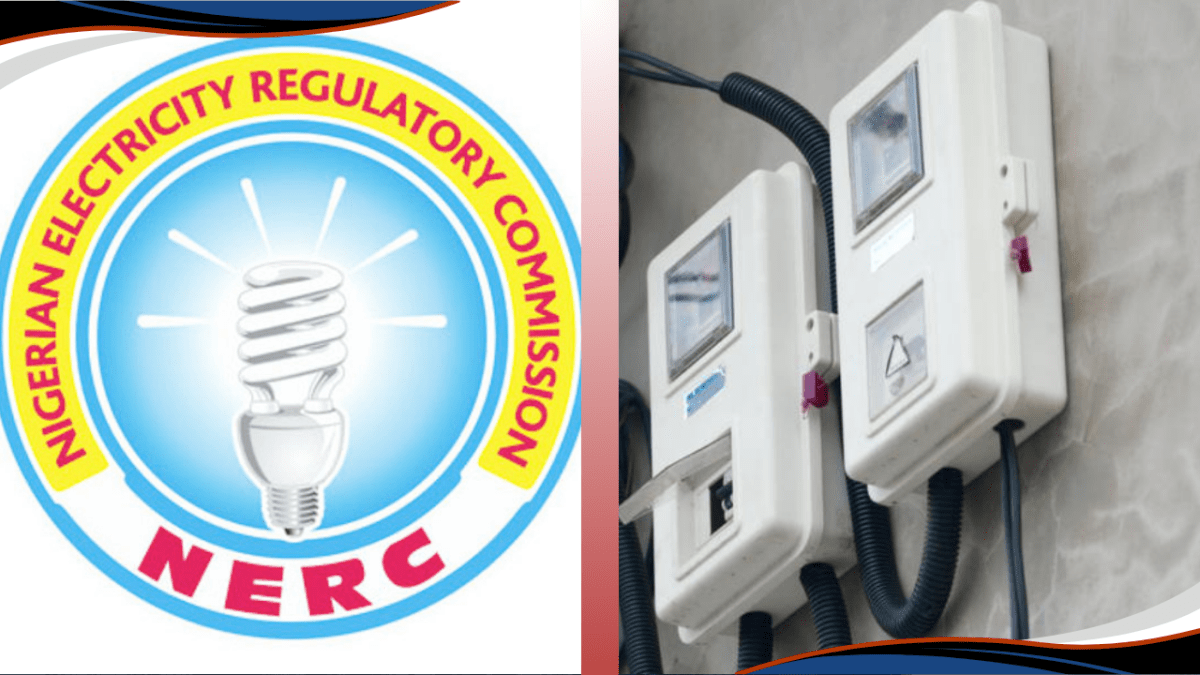
The Nigerian Electricity Regulatory Commission (NERC), has revealed that Electricity Distribution Companies (DisCos), installed 228,614 electricity meters across Nigeria between July and September 2025. This represents a slight increase from the previous quarter and reflects the ongoing effort to close the Nigeria’s longstanding metering gap, which leaves millions of consumers reliant on estimated billing.
Metering Progress and Coverage
As of September 30, 2025, only 6,661,564 out of 12,030,315 registered electricity customers were metered, representing 55.37% nationwide coverage. This means over 5 million customers remain unmetered, highlighting the scale of the challenge.
The 228,614 meters installed in Q3 marked a 0.73% increase from the 226,959 meters installed in Q2 2025. Under the Meter Asset Provider (MAP), framework—the dominant metering programme—176,302 meters, or roughly 77.12%, were deployed.
Other frameworks contributed smaller numbers:
-
Vendor-Financed installations: 44,104 meters (≈19.3%)

-
Distribution Sector Recovery Programme (DISREP): 7,902 meters
-
Meter Acquisition Fund (MAF): 175 meters
-
DisCo-Financed installations: 131 meters
Regionally, Ibadan, Aba, and Abuja DisCos led in installations, while some DisCos, including Port Harcourt and Jos, recorded declines compared to the previous quarter.
Individual DisCos’ Metering Performance
Performance among DisCos varied significantly, reflecting both operational efficiency and regional challenges:
Top Performers
-
Eko and Ikeja DisCos have metering rates above 84%, maintaining leadership in customer coverage.
-
Abuja and Ibadan DisCos recorded steady gains, contributing significantly to Q3 and Q4 installations.
-
Aba Power improved from around 69.5% to over 78% in metering coverage, reflecting a concentrated rollout effort.
Lagging DisCos
-
Enugu, Jos, Kaduna, Kano, and Yola DisCos remain below 50% coverage, indicating that millions of customers are still unmetered.
-
Challenges include logistical issues, financing gaps, and limited engagement with private meter providers, slowing the nationwide metering drive.
These differences underscore the uneven progress in Nigeria’s electricity sector: while some regions see rapid improvements, others lag behind, prolonging the reliance on estimated billing.
Consumer Implications
The large unmetered population faces continued billing uncertainty, often receiving electricity bills based on estimatesrather than actual consumption. To mitigate consumer grievances, NERC maintains monthly energy caps for unmetered customers, limiting charges according to feeder capacity and historical consumption data.
Accurate metering is critical for:
-
Transparency in billing
-
Improved revenue collection for DisCos
-
Better planning and reliability in electricity supply
Policy and Funding Drivers
Several initiatives support the metering rollout:
-
Meter Asset Provider (MAP), framework
-
Meter Acquisition Fund (MAF), in “Tranche B” deployment
-
Distribution Sector Recovery Programme (DISREP), backed by a $500 million World Bank loan
Despite these mechanisms, the pace of meter deployment remains insufficient to close the national gap quickly, prompting calls for enhanced financing, stricter enforcement, and operational efficiency among DisCos.
Outlook
The Q3 2025 data highlights incremental progress in Nigeria’s power metering drive, but also persistent structural and operational challenges:
-
228,614 new meters installed show steady growth
-
National coverage remains just over 55%, leaving millions unmetered
-
DisCo performance is uneven, with top performers demonstrating the impact of strong management and underperformers revealing ongoing systemic issues
Closing Nigeria’s metering gap will require coordinated efforts among regulators, distribution companies, funding agencies, and private sector partners.
Accurate metering not only ensures fair billing but also strengthens revenue collection, investment confidence, and consumer trust—all essential for a more reliable electricity sector.
