

Former Google CEO Eric Schmidt Warns Of AI Risks, Calls For Regulation.
Eric Schmidt, the former chief executive of Google, has expressed concerns that artificial intelligence (AI) could be exploited by terrorists or rogue states to cause harm. Speaking to the BBC’s Today programme, Schmidt described the dangers of AI as an “extreme risk,” highlighting the potential for countries such as North Korea, Iran, or Russia to misuse the technology in the development of biological weapons.
“The real fears that I have are not the ones that most people talk about AI – I talk about extreme risk,” Schmidt stated. He warned that AI could be adopted quickly by hostile actors to develop weapons capable of harming innocent people.

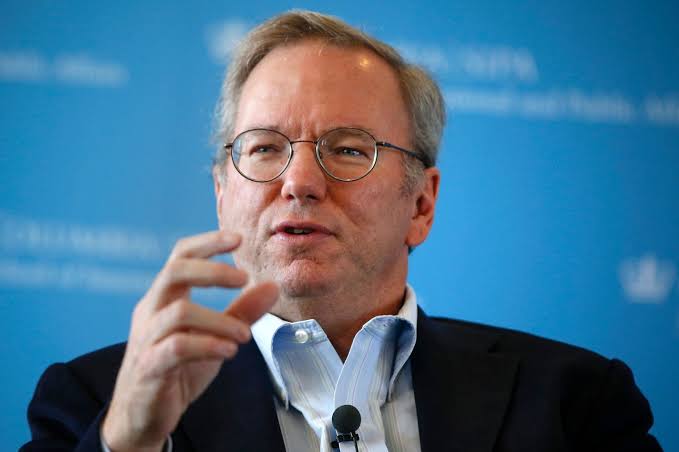
Schmidt, who served in senior positions at Google from 2001 to 2017, stressed the need for government oversight of private tech companies working on AI. However, he cautioned against excessive regulation, which he argued could stifle innovation in the sector.
Balancing Regulation and Innovation
The former Google executive supported US restrictions on the export of powerful microchips used in advanced AI systems. Before leaving office, former US President Joe Biden imposed export controls limiting the supply of these chips to only 18 countries in an effort to curb adversaries’ AI research. However, Schmidt noted that this policy could be reversed under Donald Trump if he returns to power.
Referring to the risks of AI, Schmidt explained, “Think about North Korea, or Iran, or even Russia, who have some evil goal. This technology is fast enough for them to adopt that they could misuse it and do real harm.” He added that AI could be used to create biological weapons, raising the possibility of an attack orchestrated by a terrorist figure similar to Osama bin Laden.
Despite these concerns, Schmidt insisted that AI development should not be left unregulated. “The truth is that AI and the future are largely going to be built by private companies,” he said. “It’s really important that governments understand what we’re doing and keep their eye on us.”
However, the recent AI Action Summit in Paris ended with both the US and UK refusing to sign an international agreement on AI regulation. US Vice President JD Vance argued that excessive oversight could “kill a transformative industry just as it’s taking off.” Schmidt warned that too much regulation could hinder Europe’s ability to lead in AI innovation. “The AI revolution, which is the most important revolution in my opinion since electricity, is not going to be invented in Europe,” he stated.
Smartphone Restrictions for Children
In addition to AI concerns, Schmidt addressed the issue of smartphone use among children. He admitted that the tech industry had not fully understood the negative effects of smartphones and social media on young people.
“I’m one of the people who did not understand, and I’ll take responsibility that the world does not work perfectly the way us tech people think it is,” he said. He expressed particular concern about children’s exposure to harmful online content.
Schmidt has supported initiatives to keep smartphones out of schools and has backed proposals to ban social media for children under 16. “Why would we run such a large, uncontrolled experiment on the most important people in the world, which is the next generation?” he asked.
Countries such as Australia have already introduced legislation to restrict social media use for minors, citing its potential harms. While a recent Lancet study found that banning smartphones in schools did not significantly improve students’ grades or behaviour, it did suggest that excessive social media use negatively impacted young people’s overall well-being.
As AI continues to advance and concerns grow over its regulation and ethical use, Schmidt’s warnings highlight the ongoing debate about the balance between innovation, security, and social responsibility in the tech industry.
