Close Menu
  • Home
  • Entertainment
  • National
  • International
  • Tech
  • Politics
  • Sports
  • PMNI
  • More
    • Business
    • Culture
    • Education
    • History
    • Health
  • Featured
    • Fishe Travel
    • Fishe Media
    • Fishe TV
Facebook X (Twitter) Instagram
FISHE NEWS
  • Home
  • Entertainment
  • National
  • International
  • Tech
  • Politics
  • Sports
  • PMNI
  • More
    • Business
    • Culture
    • Education
    • History
    • Health
  • Featured
    • Fishe Travel
    • Fishe Media
    • Fishe TV
Facebook X (Twitter) Instagram
FISHE NEWS
Home»National»Federal Government Spends $15.55bn On Debt Servicing Over Five Years, CBN
National

Federal Government Spends $15.55bn On Debt Servicing Over Five Years, CBN

Omolemi EboisetaleBy Omolemi EboisetaleJune 24, 2024Updated:June 24, 2024No Comments2 Mins Read
Facebook Twitter Pinterest LinkedIn Tumblr Email
Share
Facebook Twitter LinkedIn Pinterest Email

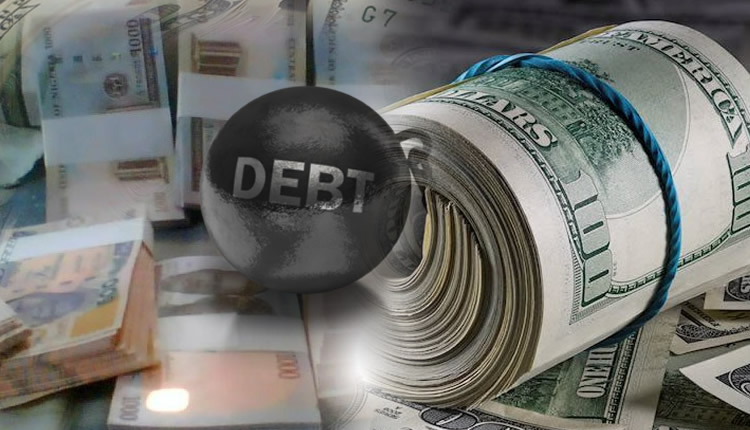
According to the latest data from the Central Bank of Nigeria (CBN), the Federal Government has expended $15.55 billion on debt servicing between 2019 and 2024. 

In 2019, Nigeria’s debt service payments amounted to $588.33 million between January and May. This figure soared to $5.40 billion in 2020, marking the highest annual debt servicing cost within the five-year period. The subsequent years saw payments of $2.02 billion in 2021, $2.34 billion in 2022, and $3.43 billion in 2023.


Between January and May 2024 alone, the country has paid $2.18 billion in debt service, a 270.9 percent increase compared to the same period in 2019. This payment is nearing half of the $4.8 billion projected for the year by Fitch Ratings.



Despite government claims of shifting focus towards domestic borrowing, Fitch Ratings predicts Nigeria’s external debt servicing will escalate by $400 million to $5.2 billion next year, raising concerns about the sustainability of the country’s debt.


The CBN’s International Payments Data highlights that 2020 witnessed the highest debt financing cost of $5.40 billion. Furthermore, FBNQuest Research notes a significant increase in Nigeria’s external debt service payments by $1.1 billion, reaching $3.5 billion in 2023. This includes $1.9 billion in market debt payments and $1.6 billion in non-market debt payments.


The Federal Government plans to incur additional external debt, including N1.8 trillion in commercial borrowing and N1.1 trillion in concessional loans as part of the 2024 budget. FBNQuest Research and Fitch Ratings expect a further rise in external debt service payments due to these anticipated borrowings.


To support President Bola Tinubu’s economic reforms, the World Bank has recently provided $2.25 billion. This package includes $1.5 billion for the Nigeria Reforms for Economic Stabilization to Enable Transformation Development Policy Financing Program and $750 million for the Nigeria Accelerating Resource Mobilization Reforms Program-for-Results.


Finance Minister and Coordinating Minister of the Economy, Mr. Wale Edun, stated the government’s commitment to restoring macroeconomic stability and promoting sustainable and inclusive economic growth through these reforms.

Debt Servicing Federal government
Share. Facebook Twitter Pinterest LinkedIn Tumblr Email
Omolemi Eboisetale
  • Website

Related Posts

Nigeria’s Data Needs To Return Home. But Is Our Infrastructure Up To The Task?

October 4, 2026

Nigeria Begins Local Production Of Next-Generation Malaria Nets As Harvestfield Opens New Front In Health Manufacturing

October 2, 2026

From Appropriation To Impact: What The 2025 Budget Extension Means For Citizens

October 1, 2026

Comments are closed.

Here is spotlighting many benefits of journeying with either Lagos State’s Blueline or Redline rails for a hassle-free day, week, month and year. Thank God for the Igbega Eko. Together we rise.
https://youtu.be/V67GV8wgyjw

Latest Posts

  • Nigeria’s Data Needs To Return Home. But Is Our Infrastructure Up To The Task?
  • Nigeria Begins Local Production Of Next-Generation Malaria Nets As Harvestfield Opens New Front In Health Manufacturing
  • From Appropriation To Impact: What The 2025 Budget Extension Means For Citizens
  • Fuel Import Licence Ruling Opens New Front In Nigeria’s Battle Over Who Controls Petrol Supply
  • Nigeria’s Permanent UN Security Council Bid: A Strong Case for Africa, But A Weak Case For Nigeria Alone

LATEST POSTS

Nigeria’s Data Needs To Return Home. But Is Our Infrastructure Up To The Task?

October 4, 2026

Nigeria Begins Local Production Of Next-Generation Malaria Nets As Harvestfield Opens New Front In Health Manufacturing

October 2, 2026

From Appropriation To Impact: What The 2025 Budget Extension Means For Citizens

October 1, 2026

Fuel Import Licence Ruling Opens New Front In Nigeria’s Battle Over Who Controls Petrol Supply

September 30, 2026

Nigeria’s Permanent UN Security Council Bid: A Strong Case for Africa, But A Weak Case For Nigeria Alone

September 28, 2026

Subscribe to Updates

Get the latest news from FISHE about politics, economy, health and business, etc

Facebook X (Twitter) Instagram Pinterest
© 2026 ThemeSphere. Designed by ThemeSphere.

Type above and press Enter to search. Press Esc to cancel.