
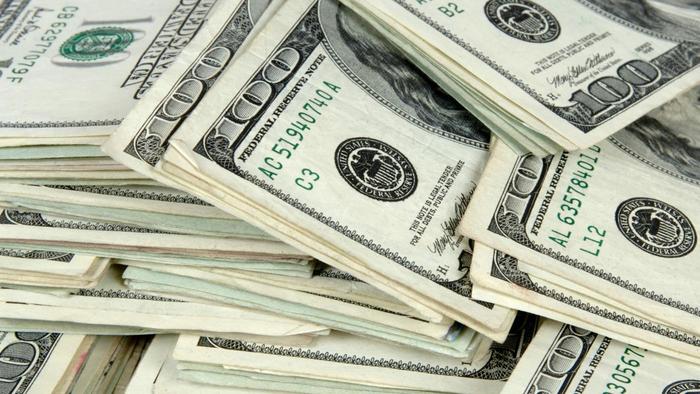
In response to the recent unprecedented decline of the national currency, the Federal Government is reportedly considering a policy that would mandate the conversion of foreign currencies held in the domiciliary accounts of citizens into naira.
The move aims to stabilise the Nigerian currency, which experienced a historic 24% depreciation against the dollar earlier this week.
According to sources within the Presidency, the proposed policy would involve the conversion of idle foreign currencies in both individual and corporate domiciliary accounts to naira at a rate determined by the Central Bank of Nigeria (CBN). The drastic measure comes as a response to the growing issue of forex scarcity and the substantial fall of the naira in the official Nigerian Foreign Exchange Market.
Highlighting the elite nature of the problem, a source from the Presidency emphasized that the Federal Government is unwilling to tolerate individuals hoarding foreign currencies, especially at the expense of the stability of the naira.

The source revealed that the CBN would set the conversion rate, aiming to address the challenge posed by forex scarcity, particularly during month-end periods when governors collect Federal Account Allocation Committee (FAAC) allocations.
The source further explained that the accumulation of dollars in domiciliary accounts, amounting to over $30 billion, is a matter that needs urgent attention. It was stressed that such practices are not common globally, and individuals should not maintain domiciliary accounts unless they have legitimate foreign currency earnings, such as salaries or foreign exchange revenue.
This potential policy shift contrasts with the earlier stance of the President Bola Tinubu administration in September 2023. At that time, the government expressed its intention to attract funds held in domiciliary accounts and by Nigerians abroad into significant investments across various sectors of the economy.
However, the proposed policy has raised concerns among industry experts, with questions about compliance and potential challenges in determining conversion rates. A branch manager of a Tier-1 bank in Lagos commented on the uncertainty surrounding compliance and the possible impact on banks and their customers.
Meanwhile, the Minister of Finance and Coordinating Minister of the Economy, Mr. Wale Edun, along with other key figures such as the Chairman of the Economic and Financial Crimes Commission (EFCC), Ola Olukoyede, and the Governor of the CBN, Olayemi Cardoso, held a meeting in Abuja on Friday. The focus of the discussion was on enhancing the efficiency of the financial system and stabilising the naira, according to a statement from the Federal Ministry of Finance.
In a related development, the CBN has banned banks and fintechs from operating International Money Transfer Operations (IMTO), requiring them to act only as agents. The move is part of the CBN’s new guidelines on International Money Transfer Services in Nigeria, which also include an increase in the minimum share capital requirement for IMTO operators to $1 million. This development has sparked discussions about the fate of fintechs that hold IMTO licences from the CBN.
Despite the challenges, there are indications of a gradual recovery for the naira, as it showed signs of stability towards the end of the week. The currency’s decline against the dollar slowed, with the official rate closing at N1,435.53/$ on Friday after reaching an all-time high of N1,482.57/$ earlier in the week.
In a bid to bridge the gap between the official and parallel markets, the CBN directed banks to sell excess dollar stock by February 1, 2024. This move, coupled with warnings against hoarding foreign currencies, aims to boost liquidity in the foreign exchange market and address the challenges posed by forex scarcity.
