
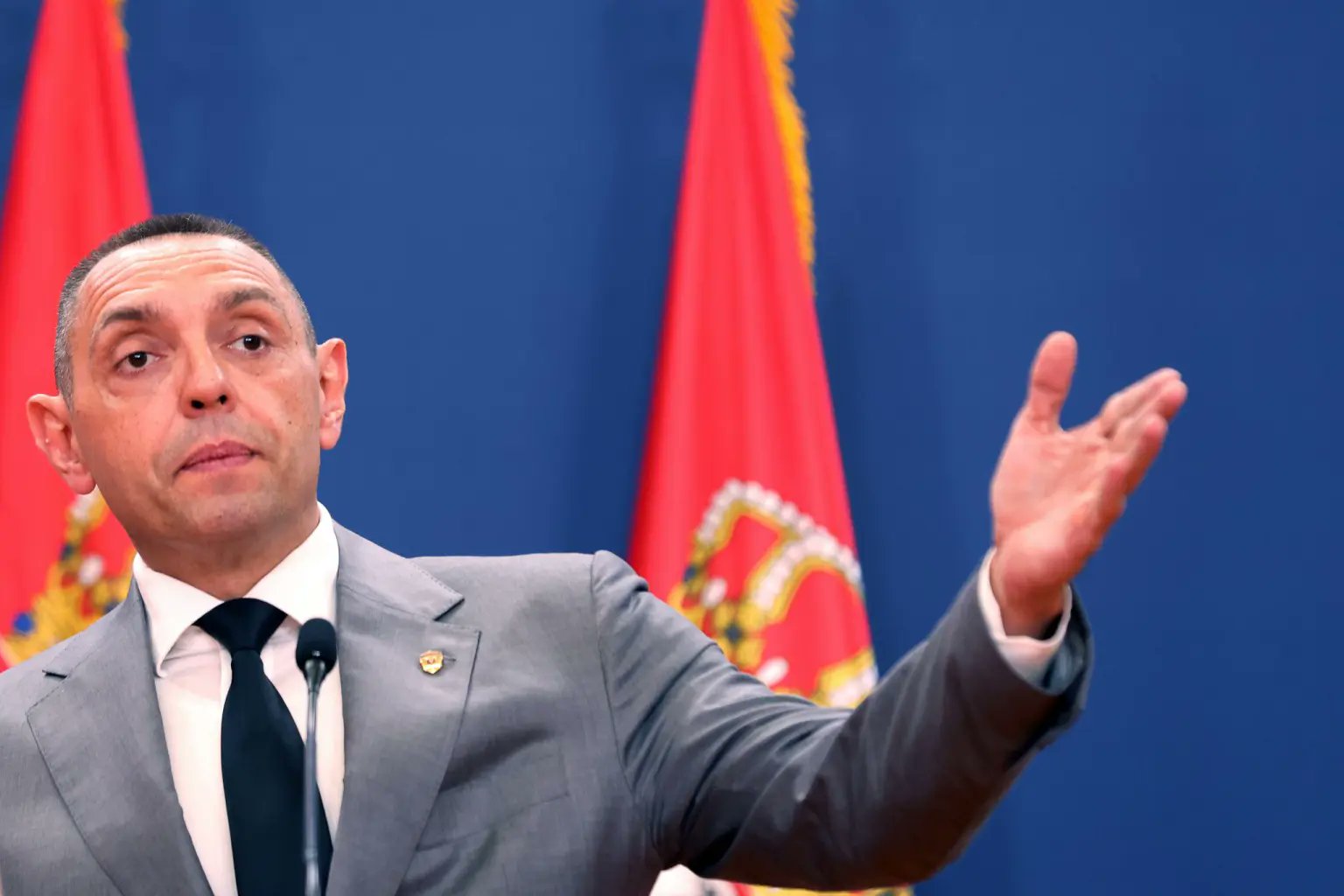
EU Demand Over Serbian Deputy PM Labelled As “Shameless Interference”.
Serbia has branded the EU’s call to exclude Deputy Prime Minister Aleksandar Vulin from the country’s new cabinet as an “unacceptable, gross, and shameless interference” in its sovereign affairs. The statement, which has ignited diplomatic tensions, comes amid ongoing discussions about Serbia’s political future and its complex relationship with the EU.
The controversy erupted when EU Enlargement Commissioner Marta Kos publicly stated that Vulin, a prominent figure known for his pro-Russian stance, should not be part of Serbia’s incoming government. Kos argued that his inclusion would undermine Serbia’s path towards EU membership, a process the Balkan nation has been navigating for years. However, this directive has been met with fierce resistance from Serbian officials, who see it as an overreach into their domestic decision-making.

Speaking to reporters, a senior Serbian government source condemned the EU’s position, asserting, “The European Union has no right to dictate who governs Serbia. This is a matter for the Serbian people alone, and such demands are a blatant violation of our sovereignty.” The source’s comments echo a broader sentiment in Belgrade that the EU’s influence has crossed a line from partnership to meddling.
Aleksandar Vulin, a key ally of Serbian President Aleksandar Vučić, has long been a polarising figure. His vocal support for closer ties with Russia, coupled with his criticism of Western policies, has made him a thorn in the side of EU officials. Yet, his political clout within Serbia remains undeniable, bolstered by his leadership of the Movement of Socialists party and his role in Vučić’s ruling coalition.
The EU’s stance has also drawn sharp criticism from Russia, a longstanding ally of Serbia. Russian Foreign Ministry spokesperson Maria Zakharova told RIA Novosti that the EU’s actions represent “a gross and shameless interference in the internal affairs of sovereign states.” She went further, suggesting that Serbia might consider aligning with the BRICS group of nations—Brazil, Russia, India, China, and South Africa—as an alternative to EU integration. “Only the Serbian people can decide their country’s fate,” Zakharova added, reinforcing Moscow’s support for Belgrade’s autonomy.
This latest spat comes at a pivotal moment for Serbia, which has been grappling with internal unrest and anti-government protests in recent months. The resignation of Prime Minister Miloš Vučević in January, followed by calls for snap elections, has heightened political uncertainty. Amid this backdrop, the EU’s intervention risks further straining its relationship with Serbia, a candidate country that has yet to fully align with Brussels’ foreign policy expectations, particularly regarding sanctions on Russia.
For many Serbians, the EU’s demand is a reminder of the delicate balancing act their country faces—caught between aspirations for European integration and a deep-seated desire to maintain independence. “We want to join Europe, but not at the cost of our dignity,” said Jelena Marković, a Belgrade resident. “Telling us who can or cannot lead us is not partnership—it’s control.”
As Serbia prepares to form a new government or head to the polls, the row over Vulin’s role underscores a broader question: how much influence should external powers wield over a nation’s destiny? For now, Belgrade stands firm, resolute in its defence of self-determination—and the EU may find its leverage tested in the days ahead.
