
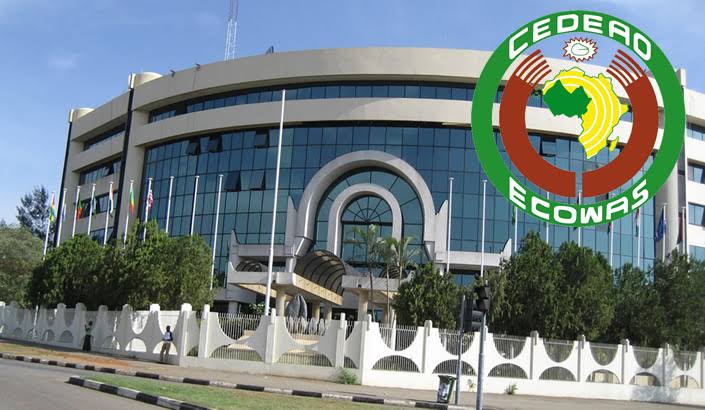
ECOWAS Ministers Urged To Implement Key Resolutions For Regional Prosperity.
Abuja, Nigeria – Nigeria’s Minister of Foreign Affairs and Chairman of the ECOWAS Council of Ministers, Ambassador Yusuf Tuggar, has called on member states of the Economic Community of West African States (ECOWAS) to diligently implement decisions reached during the 94th Ordinary Session of the Council, which concluded on Friday, 20 June 2025, in Abuja. The two-day meeting, a precursor to the 67th Ordinary Summit of ECOWAS Heads of State and Government, focused on advancing regional integration, economic growth, and security.
In his closing remarks at the session held at the State House Conference Centre, Tuggar emphasised the critical need for member states to translate the council’s resolutions into tangible outcomes. “The conclusions reached during this meeting will no doubt contribute to the actualisation of the regional integration agenda of ECOWAS,” he stated. “It remains essential that we encourage our respective governments to faithfully implement the decisions we have adopted and to actively support the recommendations emerging from our discussions.”

The session saw ministers deliberate on a wide range of issues, including economic integration, infrastructure development, trade, health, education, agriculture, and institutional reforms. Tuggar praised the collective resolve of the council to address pressing regional challenges, noting that the outcomes would enhance the well-being of West African citizens and foster long-term prosperity. “Through our continued collaboration and shared commitment, we have charted a promising path toward a more unified and prosperous region,” he said, commending the ministers’ dedication to ECOWAS’s core principles of cooperation.
Tuggar highlighted the pivotal role of ECOWAS as a leader among Africa’s regional economic communities, describing it as “first among equals” for its efforts in fostering cross-border trade and regional initiatives. He credited the ECOWAS Commission for preparing comprehensive working documents that enriched the discussions and led to positive outcomes.
The minister also underscored the importance of the inaugural West Africa Economic Summit (WAES), held on 20–21 June 2025, which brought together heads of state, ministers, private sector leaders, and investors to unlock the region’s economic potential. Tuggar noted that the summit’s focus on trade, investment, and industrial development aligns with ECOWAS’s goal of reducing dependency on external powers and boosting intra-regional trade, which currently stands at a modest 10%.
In a nod to regional inclusivity, Tuggar reiterated Nigeria’s invitation to Burkina Faso, Mali, and Niger—countries that recently withdrew from ECOWAS—to participate in the WAES, emphasising their continued role as key partners in West Africa’s economic transformation. “These nations remain our neighbours, our partners, and integral stakeholders in the future of West Africa,” he said, highlighting ongoing bilateral trade and infrastructure collaborations.
The council’s discussions also addressed non-tariff barriers hindering regional trade, with ministers approving the ECOWAS Trade and Investment Promotion Strategy and urging member states to ratify agreements such as the African Continental Free Trade Area (AfCFTA) and the WTO Fisheries Subsidy Agreement. Additionally, Tuggar expressed concern over proposed U.S. visa restrictions on ECOWAS countries, describing them as “non-tariff barriers” that could undermine trade and diplomacy in a region rich with opportunities, including critical minerals like samarium found in Nigeria’s Bauchi State.
As Tuggar prepares to step down as Chairman of the ECOWAS Council of Ministers, following President Bola Tinubu’s two-year tenure as ECOWAS Authority Chairman, he called for continued cooperation with his successor. “I hope the same spirit of collaboration will be extended to whomever takes over the leadership of this council,” he said, officially closing the 94th session.
The outcomes of the meeting, pending approval by the ECOWAS Heads of State, are expected to strengthen the bloc’s effectiveness and drive sustainable development across West Africa. With Tuggar’s charge to act swiftly and decisively, ECOWAS member states are poised to build on this momentum, fostering a more integrated and resilient region for the benefit of all its citizens.
