Close Menu
  • Home
  • Entertainment
  • National
  • International
  • Tech
  • Politics
  • Sports
  • PMNI
  • More
    • Business
    • Culture
    • Education
    • History
    • Health
  • Featured
    • Fishe Travel
    • Fishe Media
    • Fishe TV
Facebook X (Twitter) Instagram
FISHE NEWS
  • Home
  • Entertainment
  • National
  • International
  • Tech
  • Politics
  • Sports
  • PMNI
  • More
    • Business
    • Culture
    • Education
    • History
    • Health
  • Featured
    • Fishe Travel
    • Fishe Media
    • Fishe TV
Facebook X (Twitter) Instagram
FISHE NEWS
Home»News»World News»Assad Toppled As Rebels Capture Damascus, Ending Nearly A Decade Of Rule
World News

Assad Toppled As Rebels Capture Damascus, Ending Nearly A Decade Of Rule

Adejuyigbe FrancisBy Adejuyigbe FrancisDecember 9, 2024No Comments3 Mins Read
Facebook Twitter Pinterest LinkedIn Tumblr Email
Share
Facebook Twitter LinkedIn Pinterest Email

Assad Toppled As Rebels Capture Damascus, Ending Nearly A Decade Of Rule.

In a dramatic turn of events, Syrian President Bashar al-Assad has been removed from power following the capture of Damascus by rebel forces. The fall of Syria’s long-time leader marks the end of nearly a decade of his rule, sustained by Russian military intervention since 2015.
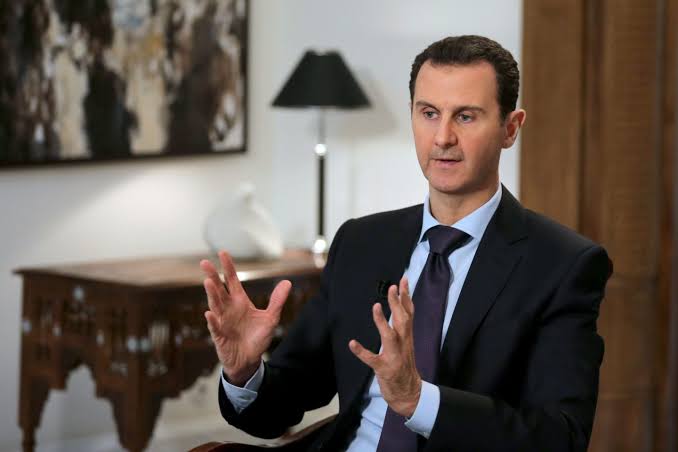
Assad, along with his family, has reportedly fled to Moscow, where the Kremlin has granted them asylum on “humanitarian grounds.” The sudden collapse of his government has sent shockwaves through Syria and the broader Middle East, bringing to an end a regime characterised by years of civil war and international controversy.



A Swift and Surprising Fall

The swift rebel offensive that led to Assad’s downfall unfolded with unexpected speed. Reports suggest that key strongholds, including Aleppo, were surrendered without significant resistance from Syrian government forces. This has left observers questioning the apparent lack of defence by Assad’s military, which had been heavily armed and supported by Russian firepower.


For nearly a decade, Assad had maintained power through alliances with Russia and Iran. The turning point came in 2015, when Moscow intervened militarily, launching airstrikes and deploying troops to bolster Assad’s regime. However, recent developments have unravelled years of effort, leaving Syria’s future uncertain.


What’s Next for Syria? 

The fall of Assad raises significant questions about Syria’s trajectory. Rebel factions now control Damascus, but the country remains fragmented, with various groups vying for influence. Stability is far from assured, and the risk of further conflict looms large.


Despite the uncertainty, the Syrian opposition has reportedly assured the safety of foreign diplomatic missions and military bases in the country, including those operated by Russia. However, with Assad’s regime no longer in power, the landscape of international influence in Syria is set to shift dramatically.


Assad’s Legacy

Assad’s downfall brings an end to a controversial chapter in Syrian history. His rule was marked by widespread civil unrest, allegations of human rights abuses, and a devastating civil war that displaced millions of Syrians. While some viewed him as a stabilising force against extremist groups, his presidency was widely criticised for its authoritarianism and the heavy toll inflicted on Syrian civilians.


 Syria’s Uncertain Future

As Damascus adjusts to this new reality, Syrians face an uncertain path forward. The challenge of rebuilding the country and forging a unified government will be immense. For the international community, the fall of Assad marks a pivotal moment, one that could reshape the balance of power in the Middle East for years to come.


While Bashar al-Assad’s departure signals the end of one era, it opens a new chapter for Syria—a chapter defined by both opportunity and significant challenges ahead.

Aleppo Assad Damascus syria Syrian Rebels
Share. Facebook Twitter Pinterest LinkedIn Tumblr Email
Adejuyigbe Francis
  • Website

Thought Leader, Idea Bank, Nation Builder.

Related Posts

Nigeria’s Data Needs To Return Home. But Is Our Infrastructure Up To The Task?

October 4, 2026

Nigeria Begins Local Production Of Next-Generation Malaria Nets As Harvestfield Opens New Front In Health Manufacturing

October 2, 2026

From Appropriation To Impact: What The 2025 Budget Extension Means For Citizens

October 1, 2026

Comments are closed.

Here is spotlighting many benefits of journeying with either Lagos State’s Blueline or Redline rails for a hassle-free day, week, month and year. Thank God for the Igbega Eko. Together we rise.
https://youtu.be/V67GV8wgyjw

Latest Posts

  • Nigeria’s Data Needs To Return Home. But Is Our Infrastructure Up To The Task?
  • Nigeria Begins Local Production Of Next-Generation Malaria Nets As Harvestfield Opens New Front In Health Manufacturing
  • From Appropriation To Impact: What The 2025 Budget Extension Means For Citizens
  • Fuel Import Licence Ruling Opens New Front In Nigeria’s Battle Over Who Controls Petrol Supply
  • Nigeria’s Permanent UN Security Council Bid: A Strong Case for Africa, But A Weak Case For Nigeria Alone

LATEST POSTS

Nigeria’s Data Needs To Return Home. But Is Our Infrastructure Up To The Task?

October 4, 2026

Nigeria Begins Local Production Of Next-Generation Malaria Nets As Harvestfield Opens New Front In Health Manufacturing

October 2, 2026

From Appropriation To Impact: What The 2025 Budget Extension Means For Citizens

October 1, 2026

Fuel Import Licence Ruling Opens New Front In Nigeria’s Battle Over Who Controls Petrol Supply

September 30, 2026

Nigeria’s Permanent UN Security Council Bid: A Strong Case for Africa, But A Weak Case For Nigeria Alone

September 28, 2026

Subscribe to Updates

Get the latest news from FISHE about politics, economy, health and business, etc

Facebook X (Twitter) Instagram Pinterest
© 2026 ThemeSphere. Designed by ThemeSphere.

Type above and press Enter to search. Press Esc to cancel.