Close Menu
  • Home
  • Entertainment
  • National
  • International
  • Tech
  • Politics
  • Sports
  • PMNI
  • More
    • Business
    • Culture
    • Education
    • History
    • Health
  • Featured
    • Fishe Travel
    • Fishe Media
    • Fishe TV
Facebook X (Twitter) Instagram
FISHE NEWS
  • Home
  • Entertainment
  • National
  • International
  • Tech
  • Politics
  • Sports
  • PMNI
  • More
    • Business
    • Culture
    • Education
    • History
    • Health
  • Featured
    • Fishe Travel
    • Fishe Media
    • Fishe TV
Facebook X (Twitter) Instagram
FISHE NEWS
Home»Worldwide»India’s Suspension Of Indus Waters Treaty Raises Questions Over Water Control Feasibility
Worldwide

India’s Suspension Of Indus Waters Treaty Raises Questions Over Water Control Feasibility

Adejuyigbe FrancisBy Adejuyigbe FrancisApril 25, 2025No Comments3 Mins Read
Facebook Twitter Pinterest LinkedIn Tumblr Email
Share
Facebook Twitter LinkedIn Pinterest Email

India’s Suspension Of Indus Waters Treaty Raises Questions Over Water Control Feasibility.

India’s recent suspension of the Indus Waters Treaty (IWT) has sparked debate over whether it can truly halt the flow of the Indus River and its tributaries into Pakistan, in response to mounting tensions following a deadly attack in Indian-administered Kashmir.


The 1960 treaty, brokered by the World Bank, has long governed the sharing of six rivers in the Indus basin between India and Pakistan. Despite surviving two wars and numerous political tensions, India’s decision to suspend the agreement marks an unprecedented shift in its water diplomacy.

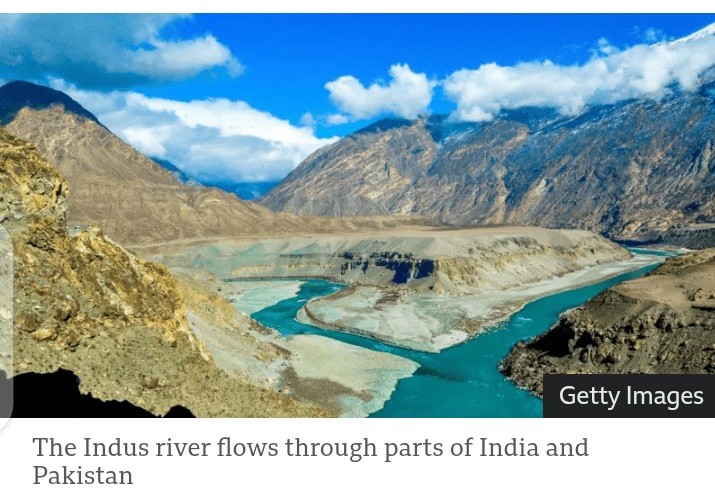


The move is one of several retaliatory actions taken by India after accusing Pakistan of backing cross-border terrorism—an accusation Islamabad strongly denies. In response, Pakistan has warned that any attempt to obstruct water flow would be considered “an act of war.”


Under the original terms of the IWT, India was allocated exclusive rights over the eastern rivers—Ravi, Beas and Sutlej—while Pakistan retained access to 80% of the western rivers—Indus, Jhelum and Chenab. Pakistan relies heavily on these waters for agriculture and hydropower, making the basin a critical national resource.


The suspension has raised serious concerns over whether India could feasibly disrupt river flows. However, experts argue that India lacks the necessary infrastructure to hold back or divert the vast volumes of water that pass through these rivers, especially during peak flow seasons.


“The infrastructure India has are mostly run-of-the-river hydropower plants that do not need massive storage,” explained Himanshu Thakkar, a regional water expert from the South Asia Network on Dams, Rivers and People. These plants generate electricity by using the river’s natural flow without storing significant amounts of water.


Furthermore, Indian authorities have acknowledged that despite being entitled to a 20% share of the western rivers, the country has not been able to utilise it fully due to inadequate infrastructure—a point often raised to justify new water projects that Pakistan views as treaty violations.


With the suspension in place, India may now proceed to modify existing water infrastructure or develop new projects without needing to consult or share documentation with Pakistan—an obligation that previously existed under the treaty.


While India’s geographic position as the upstream country offers a theoretical advantage, experts believe it is unlikely to translate into immediate or large-scale water control. The geopolitical and technical implications of such a move would also be significant.


As tensions continue to escalate, the future of one of the world’s most significant transboundary water-sharing agreements hangs in the balance, with regional stability and millions of livelihoods at stake.

India Indus River Pakistan Tension
Share. Facebook Twitter Pinterest LinkedIn Tumblr Email
Adejuyigbe Francis
  • Website

Thought Leader, Idea Bank, Nation Builder.

Related Posts

Nigeria’s Permanent UN Security Council Bid: A Strong Case for Africa, But A Weak Case For Nigeria Alone

September 28, 2026

Fostering The Future Together: Advancing Global Technology And Education Partnerships For Children

September 22, 2026

U.S. Welcomes Appointment Of Luke J. Lindberg As WFP Executive Director

September 21, 2026

Comments are closed.

Here is spotlighting many benefits of journeying with either Lagos State’s Blueline or Redline rails for a hassle-free day, week, month and year. Thank God for the Igbega Eko. Together we rise.
https://youtu.be/V67GV8wgyjw

Latest Posts

  • BREAKING IN THE NEWS: Several Feared Dead As Helicopter Crashes In Igbokoda, Ondo State
  • 100 Days To Nigeria’s 2027 Election: The Ballot, The Battle And The Burden
  • Nigeria’s Data Needs To Return Home. But Is Our Infrastructure Up To The Task?
  • Nigeria Begins Local Production Of Next-Generation Malaria Nets As Harvestfield Opens New Front In Health Manufacturing
  • From Appropriation To Impact: What The 2025 Budget Extension Means For Citizens

LATEST POSTS

BREAKING IN THE NEWS: Several Feared Dead As Helicopter Crashes In Igbokoda, Ondo State

October 5, 2026

100 Days To Nigeria’s 2027 Election: The Ballot, The Battle And The Burden

October 5, 2026

Nigeria’s Data Needs To Return Home. But Is Our Infrastructure Up To The Task?

October 4, 2026

Nigeria Begins Local Production Of Next-Generation Malaria Nets As Harvestfield Opens New Front In Health Manufacturing

October 2, 2026

From Appropriation To Impact: What The 2025 Budget Extension Means For Citizens

October 1, 2026

Subscribe to Updates

Get the latest news from FISHE about politics, economy, health and business, etc

Facebook X (Twitter) Instagram Pinterest
© 2026 ThemeSphere. Designed by ThemeSphere.

Type above and press Enter to search. Press Esc to cancel.