Close Menu
  • Home
  • Entertainment
  • National
  • International
  • Tech
  • Politics
  • Sports
  • PMNI
  • More
    • Business
    • Culture
    • Education
    • History
    • Health
  • Featured
    • Fishe Travel
    • Fishe Media
    • Fishe TV
Facebook X (Twitter) Instagram
FISHE NEWS
  • Home
  • Entertainment
  • National
  • International
  • Tech
  • Politics
  • Sports
  • PMNI
  • More
    • Business
    • Culture
    • Education
    • History
    • Health
  • Featured
    • Fishe Travel
    • Fishe Media
    • Fishe TV
Facebook X (Twitter) Instagram
FISHE NEWS
Home»Culture»The Significance Of Henna In Northern Nigerian Weddings
Culture

The Significance Of Henna In Northern Nigerian Weddings

Onyinyechi NwanunobiBy Onyinyechi NwanunobiApril 12, 2023No Comments2 Mins Read
Facebook Twitter Pinterest LinkedIn Tumblr Email
Share
Facebook Twitter LinkedIn Pinterest Email

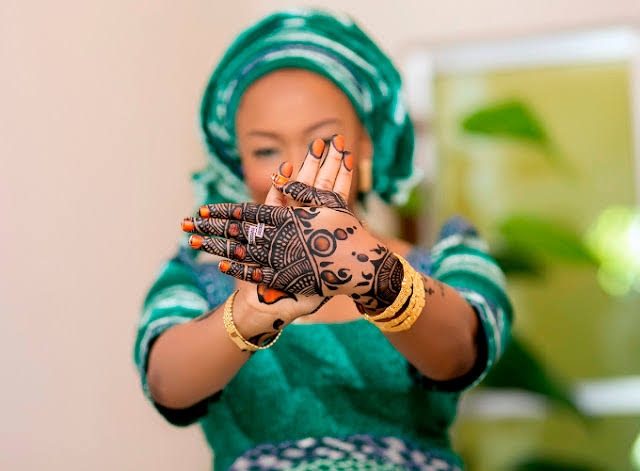
If you have ever attended a Hausa or Fulani wedding, you must have noticed certain designs on the bride’s body – her henna.

Henna is made from the leaves of the henna plant (Lawsonia inermis), the henna dye is used to create beautiful and temporary designs on the skin, particularly on the hands and feet, as a form of body art.

The use of henna for body art has been practised for thousands of years in various cultures around the world. The practice was introduced to northern Nigeria as early as the period of the Roman empire and since then, henna designs have been present in special occasions such as weddings, festivals, and other celebrations.

In northern Nigeria, the use of henna, also referred to as Laali, is not just a way for them to express themselves culturally but also, a symbol of beauty, grace, and femininity. In addition, it is believed that henna can bring good luck and ward off evil spirits.



For the Fulani or Hausa bride who uses henna, the intricate designs are a way for her to showcase her creativity and express her individuality, as each design is unique and personalised.

The process of drawing the henna on the hands, palms and feet, also called the ‘Wuni or Sa Lalle’ is seen as an important pre-wedding step by the bride, her family and friends.

This celebration is seen as the time when a bride gets to spend her last time in her father’s house surrounded by friends and family and also a way for families and communities to come together and celebrate the union of two families.

During the Wuni or Sa Lalle, other activities take place like; storytelling, singing, and dancing. The bride also bonds with the women in her family and community.

It can also be said that apart from it being a piece of art, henna plays a significant role in northern Nigerian weddings as a way to celebrate tradition, beauty, and community.

Share. Facebook Twitter Pinterest LinkedIn Tumblr Email
Onyinyechi Nwanunobi
  • Website

Related Posts

Traffic Advisory: Road Closures Set For Lagos Fanti Carnival On April 6

April 3, 2026

Child Discipline In Nigeria: Shifting From Corporal Punishment To More Effective Approaches – Any Simple Solution?

March 27, 2026

Alaafín Orompoto: The Fearless Queen Who Rode Into Battle And Shaped Oyo History

March 19, 2026

Comments are closed.

Here is spotlighting many benefits of journeying with either Lagos State’s Blueline or Redline rails for a hassle-free day, week, month and year. Thank God for the Igbega Eko. Together we rise.
https://youtu.be/V67GV8wgyjw

Latest Posts

  • BREAKING IN THE NEWS: Several Feared Dead As Helicopter Crashes In Igbokoda, Ondo State
  • 100 Days To Nigeria’s 2027 Election: The Ballot, The Battle And The Burden
  • Nigeria’s Data Needs To Return Home. But Is Our Infrastructure Up To The Task?
  • Nigeria Begins Local Production Of Next-Generation Malaria Nets As Harvestfield Opens New Front In Health Manufacturing
  • From Appropriation To Impact: What The 2025 Budget Extension Means For Citizens

LATEST POSTS

BREAKING IN THE NEWS: Several Feared Dead As Helicopter Crashes In Igbokoda, Ondo State

October 5, 2026

100 Days To Nigeria’s 2027 Election: The Ballot, The Battle And The Burden

October 5, 2026

Nigeria’s Data Needs To Return Home. But Is Our Infrastructure Up To The Task?

October 4, 2026

Nigeria Begins Local Production Of Next-Generation Malaria Nets As Harvestfield Opens New Front In Health Manufacturing

October 2, 2026

From Appropriation To Impact: What The 2025 Budget Extension Means For Citizens

October 1, 2026

Subscribe to Updates

Get the latest news from FISHE about politics, economy, health and business, etc

Facebook X (Twitter) Instagram Pinterest
© 2026 ThemeSphere. Designed by ThemeSphere.

Type above and press Enter to search. Press Esc to cancel.