

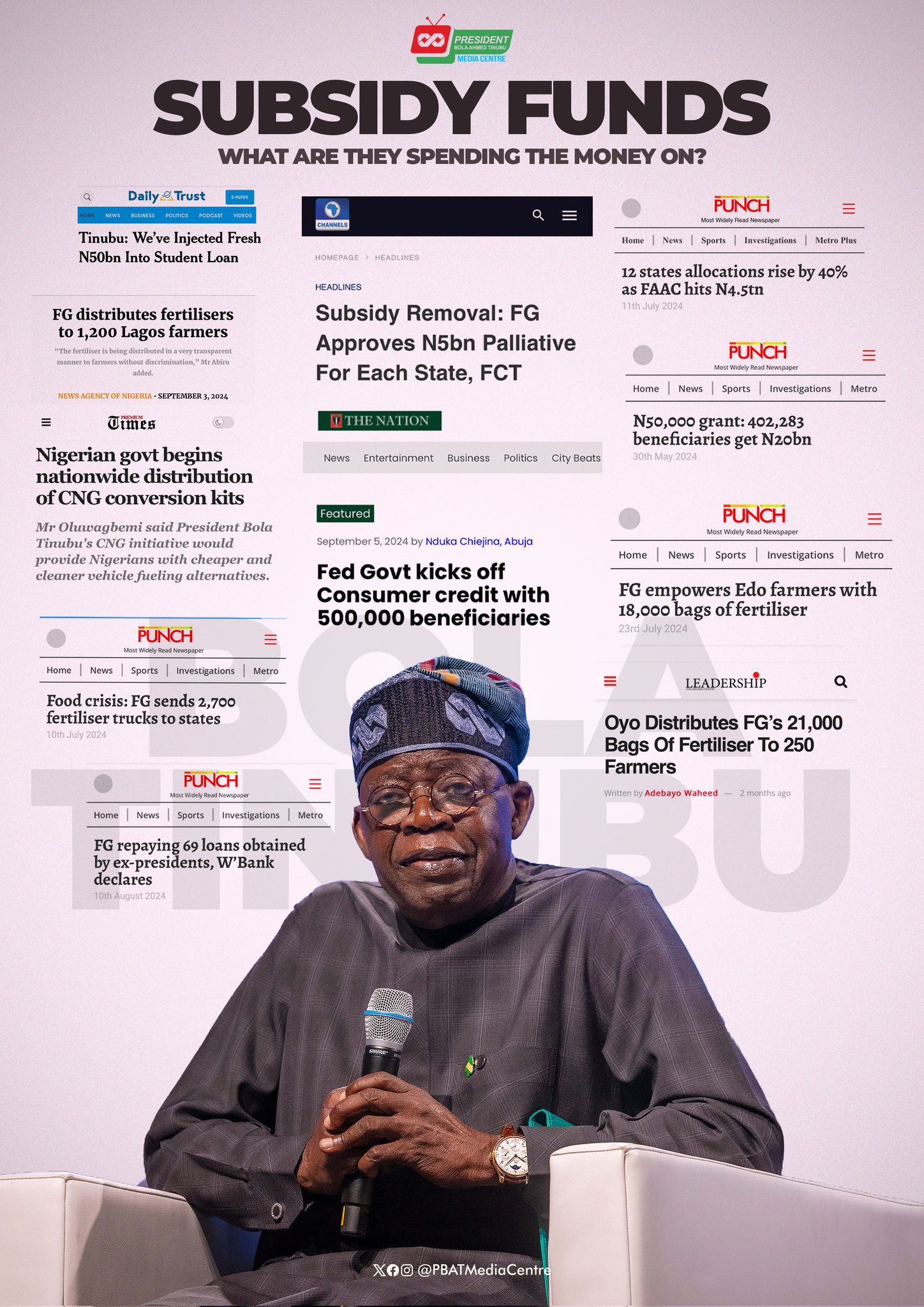
According to a statement published on the X handle (formerly Twitter), of the media team of President Tinubu on Monday, gains of fuel subsidy removal was broken-down into different sectors of national development amidst other ongoing reforms in the country.
The circular critiques Tinubu’s impact in the following focused areas:
Economic Gains:
1. Reduced Fiscal Burden: Subsidy removal freed trillions of Naira enabling investment in critical sectors.
2. Increased Revenue: The Federal Government now collects full revenue from fuel sales, bolstering its finances.
3. Improved Macroeconomic Stability: Reduced subsidy expenditure helped stabilize the economy, lowering inflation and interest rates.

Investment Gains:
- Attracted Foreign Investment: Subsidy removal made Nigeria’s oil sector more attractive to investors, sparking new investments.
- Private Sector Participation: The removal of subsidy has encouraged private sector involvement in the oil industry, driving growth and efficiency.
- Increased Economic Activity: Subsidy savings invested in infrastructure and social programs stimulated economic growth.
Transparency and Accountability Gains:
- Reduced Corruption: Subsidy removal eliminated opportunities for corruption and rent-seeking.
- Improved Governance: Enhanced transparency and accountability in government spending.
- Better Resource Allocation: Funds redirected to priority areas like healthcare, education, and infrastructure.
Energy Sector Gains:
- Market-Driven Pricing: Subsidy removal allowed market forces to determine fuel prices, promoting efficiency.
- Increased Refining Capacity: Encouraged investment in domestic refining, reducing import dependence.
- Diversified Energy Mix: Subsidy savings invested in renewable energy sources, promoting diversification.
Social Gains:
- Improved Healthcare: Subsidy savings invested in healthcare infrastructure and services.
- Enhanced Education: Increased funding for education, improving access and quality.
- Infrastructure Development: Subsidy savings invested in roads, bridges, and transportation.
Environmental Gains:
- Reduced Smuggling: Subsidy removal decreased fuel smuggling, reducing environmental pollution.
- Encouraged Cleaner Energy: Investment in renewable energy sources promotes cleaner energy and reduced carbon emissions.
Overall:
- Monthly allocations to many states and local governments have increased significantly, with some getting up to 40% increase.
- Nigeria has successfully paid billions of inherited debts from several administrations.
- Hundreds of billions have been allocated to the revolutionary Students Loan and Consumer Credit Schemes.
- Landmark infrastructures are currently going on across the country, with existing roads and railways getting completed and new ones such as Lagos-Calabar highway moving at incredible pace.
- Nigeria’s foreign reserves has increased from $34bn in 2023 to $39bn in October 2024.
- The debt to revenue ratio has dropped drastically from 97% in 2023 to around 64%.
- Fuel consumption has dropped drastically from 66 million litres daily to 25 million liters, signifying a massive reduction in smuggling to nearby countries.
- Payment of debts owed to gas companies has resulted in massive improvements in electricity generation from 4300MW to 5500MW.
- Over 1 million MSMEs have benefited from N50,000 grants.
- The minimum wage has been increased from N30,000 to N70,000 These gains demonstrate the positive impact of fuel subsidy removal on Nigeria’s economy, energy sector, and society.
The president admits that it has been a challenging year so far, but it must be said that so much progress has been made in the bid to reposition the economy for a sustainable future, the statement added.
