
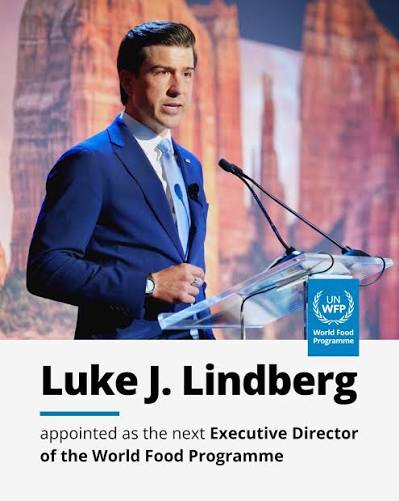
United Nations Secretary-General António Guterres and Qu Dongyu, the Director-General of the Food and Agriculture Organisation (FAO), have officially announced the appointment of Luke J. Lindberg. A U.S. national and a senior official at the U.S. Department of Agriculture (USDA), Lindberg will take on the role of the next Executive Director of the United Nations World Food Programme (WFP).
The appointment came after discussions with the WFP Executive Board, which gave its approval. Lindberg takes over from Cindy H. McCain, with WFP’s Deputy Executive Director and Chief Operating Officer, Carl Skaus, stepping in as Acting Executive Director during this transition period.
This appointment is particularly important as it arrives at a time of intense humanitarian challenges for WFP. The organisation has reported that around 266 million people are grappling with severe food insecurity, while WFP is currently providing assistance to over 100 million individuals across 83 countries. WFP has identified conflict, extreme weather, and economic hardships as the key factors contributing to the current food crisis.
The United States has expressed its support for Lindberg’s new role. In a statement released on September 18, 2026, the U.S. Department of State highlighted Washington’s long-standing position as WFP’s largest donor and outlined its priorities for Lindberg’s leadership, which include organisational reform, operational excellence, enhancing donor relations, accountability, and ensuring effective humanitarian aid delivery.

The Appointment
Lindberg’s appointment was officially announced by Secretary-General Guterres and FAO Director-General Qu Dongyu, after they consulted with the WFP Executive Board during a special session in Rome. The WFP Executive Board then expressed their support for the new appointment.
As the WFP Executive Director, Lindberg will be at the helm of the organisation’s global operations, tasked with carrying out its humanitarian mission. This means he’ll be overseeing an organisation that operates in numerous countries, tackling emergencies related to conflict, displacement, natural disasters, and food insecurity.
This appointment also continues the trend of American leadership at WFP. Lindberg takes over from Cindy McCain, who served as the head of WFP from April 2023 until 2026. After McCain’s departure, Carl Skau stepped in as interim director while the search for a new leader was underway.
Who Is Luke J. Lindberg?
Lindberg joins the World Food Programme (WFP), after a notable stint at the U.S. Department of Agriculture, where he held the role of Under Secretary for Trade and Foreign Agricultural Affairs. The United Nations highlights that this position has equipped him with Cabinet-level expertise in food-assistance policy, agricultural trade, international financing operations, and the management of extensive, decentralised organisations.
Before his time at USDA in 2025, Lindberg was the founder and leader of South Dakota Trade, a public-private initiative aimed at broadening international markets for South Dakota exporters. WFP notes that he served as its President and CEO from November 2022 until August 2025.
His previous professional journey includes:
– U.S. Export-Import Bank: Chief of Staff and Chief Strategy Officer.
– Sanford Health: Director of External Affairs.
– Sanford World Clinic: Director of Global Operations, where he oversaw international health operations in seven countries.
– South Dakota Trade: President and CEO, concentrating on international trade and export development.
– U.S. Department of Agriculture: Under Secretary for Trade and Foreign Agricultural Affairs.
Lindberg earned his Bachelor of Arts, Master of Public Policy, and Master of Business Administration from the University of Maryland.
Why the Appointment Matters
This appointment carries a weight that goes beyond just a routine leadership change, especially since the WFP is grappling with a mix of humanitarian, financial, and operational challenges.
The WFP’s mission is clear: to provide food assistance to those suffering from hunger and humanitarian crises. Their efforts include emergency food aid, nutrition programs, resilience-building initiatives, and various activities aimed at tackling food insecurity.
Right now, the situation is particularly tough. WFP estimates that around 266 million people are facing acute food insecurity. On top of that, the organisation relies heavily on voluntary contributions from governments and other donors. This means the Executive Director has to juggle urgent humanitarian needs with the financial resources and operational capabilities available.
Recent reports highlight the severity of the funding crisis. Take Sudan, for instance—WFP’s funding has dropped significantly compared to last year, even as humanitarian needs have surged. Acting Executive Director Carl Skau pointed out that the organization is facing a staggering funding gap of nearly $300 million just to keep operations running there.
Given this backdrop, the focus on operational efficiency, nurturing donor relationships, and implementing organisational reforms is especially crucial for Lindberg’s upcoming administration.
The United States’ Position
The U.S. Department of State shared an encouraging statement after the recent appointment, outlining four key priorities:
First up is a focus on WFP’s core mission — making sure the organisation zeroes in on its essential role in tackling hunger and food insecurity.
Next, there’s a push for operational excellence — enhancing how effectively and efficiently WFP turns donor contributions into humanitarian aid.
Then, we have stronger donor relationships — working to maintain and deepen connections with the governments that fund WFP’s efforts.
Lastly, accountability and delivery are crucial — ensuring that humanitarian assistance actually reaches those in need.
The State Department also highlighted the long-standing relationship between the United States and WFP, pointing out that the U.S. has been the largest donor since the organisation was established in 1961.
What stands out in the U.S. statement is how it links Lindberg’s appointment to a clear reform agenda. Washington isn’t just marking a change in personnel; it’s laying out specific areas—mandate, operations, donor relations, and accountability—that it expects the new leadership to tackle head-on.
Implications for WFP
Organisational reform
The U.S. statement clearly emphasizes the need for reforms that will keep the WFP focused on its main mission. This indicates that figuring out priorities will be a key challenge for Lindberg during his time in office.
For an organisation that operates across many countries with limited resources, the real challenge lies in deciding which activities and interventions to keep, grow, or scale back, all while ensuring that the humanitarian impact remains strong.
Operational efficiency
The focus on “excellence in operations” highlights just how crucial logistics and delivery systems are for the WFP. The organization’s success hinges not just on securing financial support but also on sourcing food and other essential supplies, navigating challenging terrains, and getting aid to those in crisis-affected areas.
Lindberg’s experience in international trade, agricultural policy, and management could be quite beneficial in this role.
Donor relations
The World Food Programme (WFP) heavily depends on voluntary contributions, which means its capacity to tackle crises hinges on ongoing collaboration with donor governments and other funding partners.
The United States has made it clear that enhancing relationships with donors is a top priority. Meanwhile, the European Union, another key supporter of the WFP, emphasized that effective cooperation among UN agencies, robust partnerships, and humanitarian diplomacy will be crucial as humanitarian needs grow and public resources dwindle.
Humanitarian delivery
The key measure of how well the WFP is doing hinges on whether they can get assistance to those who are struggling with hunger. Given the vast needs out there, the choices made in operations will significantly impact individuals caught in the crossfire of conflict, natural disasters, displacement, and economic challenges.
Carla Barroso Carneiro, the President of the WFP Executive Board and Brazil’s Ambassador, highlighted the pressing need to tackle global hunger. She also expressed her eagerness to collaborate closely with Lindberg and the rest of the Board.
Significance of Lindberg’s Professional Background
Lindberg’s career path stands out from the typical humanitarian profile. He has spent a significant portion of his professional life in areas like agriculture, international trade, government administration, finance, and global health operations.
In his role at the USDA, he gained firsthand experience with agricultural policy and international food systems. His time at the Export-Import Bank allowed him to dive into international financing and government operations, while his work with the Sanford World Clinic focused on managing global health initiatives.
These diverse experiences could be quite valuable for the WFP, as food assistance touches on a range of interconnected issues, including agriculture, trade, procurement, logistics, finance, and international collaboration.
However, his new role also places him at the helm of a highly specialised humanitarian organisation. His ability to collaborate with WFP’s dedicated humanitarian staff, UN agencies, governments, implementing partners, and the communities they serve will be a crucial aspect of his leadership.
U.S.–WFP Relations
The appointment also carries significant weight for the relationship between the U.S. and the WFP.
As the largest donor to the WFP, the United States has seen its nationals in the organisation’s top leadership roles for many years. With Lindberg stepping into this position, it’s a continuation of a long-standing partnership between Washington and the WFP.
However, the U.S. is framing this relationship in a way that emphasizes WFP’s value to all Member States, not just to America. They believe that under Lindberg’s guidance, the WFP will not only benefit the broader membership but also further its humanitarian mission.
The key challenge will be how this new leadership navigates the priorities of major donors while staying true to WFP’s multilateral goals and addressing the humanitarian needs identified in its country operations.
Key Challenges Facing the New Executive Director
Lindberg is stepping into his new role at a time when he’s facing some significant challenges.
Global food insecurity
Right off the bat, the most pressing issue is the staggering level of hunger. The World Food Programme (WFP), currently estimates that around 266 million people are grappling with acute food insecurity, which means the demand for help far outstrips what humanitarian organisations can provide.
Funding constraints
On top of that, dwindling humanitarian funding is creating a gap between what’s needed and what WFP can actually deliver. The situation in Sudan is a prime example of how financial limitations can lead to tough operational decisions, even in the midst of severe humanitarian crises.
Conflict and access
Many of the worst food crises are happening in conflict zones. Humanitarian organisations are often left to negotiate access, ensure the safety of their staff, and set up supply chains in areas where the infrastructure and security can shift in an instant.
Donor expectations
Major donors are increasingly focused on accountability, measurable outcomes, and the efficient use of resources. This means Lindberg will need to keep donor confidence high while making sure that operational choices align with WFP’s humanitarian mission.
Coordination within the UN system
WFP works alongside other agencies like the FAO and various UN and humanitarian organisations. The EU has particularly highlighted the need for collaboration among UN agencies as humanitarian demands rise and resources become scarcer.
Leadership Transition
Lindberg’s appointment marks the end of a leadership transition that kicked off with Cindy McCain’s exit.
McCain held the position of Executive Director from April 2023 until May 2026. Following her departure, Carl Skau, who is WFP’s Deputy Executive Director and Chief Operating Officer, stepped in as Acting Executive Director. Both the UN and WFP leadership have expressed their gratitude for McCain’s contributions and Skau’s guidance during this transitional phase.
With Lindberg now on board, WFP has a chance to shift from a temporary leadership setup to a more stable and strategic direction for the future.
International Reaction
Several key organisations have thrown their support behind the recent appointment.
The WFP Executive Board expressed its approval of Lindberg’s new role, with the board president highlighting the importance of collaboration and the pressing global hunger crisis we face today.
The European Union also voiced its backing, with its delegation in Rome pointing to Lindberg’s strong commitment to multilateralism, UN principles, sustainable development, international humanitarian law, UN reform, and the strategic goals of the WFP.
The United States welcomed the appointment as well, connecting it to essential priorities like reform, accountability, operational effectiveness, and strengthening donor relations.
These endorsements reflect a wide-ranging institutional focus on the new leadership, especially as the WFP navigates significant humanitarian and financial challenges.
Issues to Watch During Lindberg’s Tenure
To gauge the direction of WFP under its new Executive Director, several key indicators will come into play:
Funding: Can WFP keep up or even boost donor contributions, especially with so many other humanitarian needs vying for attention?
Operational efficiency: Are the reforms leading to real, tangible improvements in areas like procurement, logistics, and delivery?
Coverage: How well does WFP convert its available resources into meaningful assistance for those grappling with severe food insecurity?
Donor relations: Is the organisation able to maintain strong ties with major players like the United States, the European Union, and other significant contributors?
Multilateral cooperation: How effectively does WFP collaborate with FAO, other UN agencies, governments, and humanitarian partners?
Accountability: Are the reforms enhancing transparency and showcasing the effective use of donor funds?
Strategic prioritisation: How does WFP strike a balance between immediate emergency responses and longer-term goals related to food security and resilience?
Conclusion
Luke J. Lindberg stepping in as the Executive Director of the United Nations World Food Programme marks a pivotal change for one of the largest humanitarian organisations on the planet.
His diverse background blends U.S. agricultural policy, international trade, government administration, financing, and global health operations. The United Nations and WFP have pointed out how this experience is crucial for steering a vast, decentralized organisation that operates in a challenging international landscape.
The U.S. government’s stance is clear: they expect the new leadership to focus on essential humanitarian priorities, ensure operational effectiveness, maintain accountability, and foster strong relationships with donors.
However, Lindberg takes the helm during a particularly tough time. The WFP has reported that hundreds of millions of people are grappling with severe food insecurity, and funding limitations are hampering the organisation’s ability to address urgent needs in some of the most critical crises around the world.
Ultimately, the impact of his leadership will hinge not just on his appointment, but on how effectively the new administration can turn its declared priorities into real humanitarian action, sustainable funding, operational improvements, and collaboration among WFP’s Member States and global partners.
