

LAGOS, Nigeria — September 30, 2026 — Nigeria is taking a big step forward in the fight against malaria by starting to produce a new generation of insecticide-treated mosquito nets. This initiative aims to address a major challenge: the growing resistance to traditional insecticides.
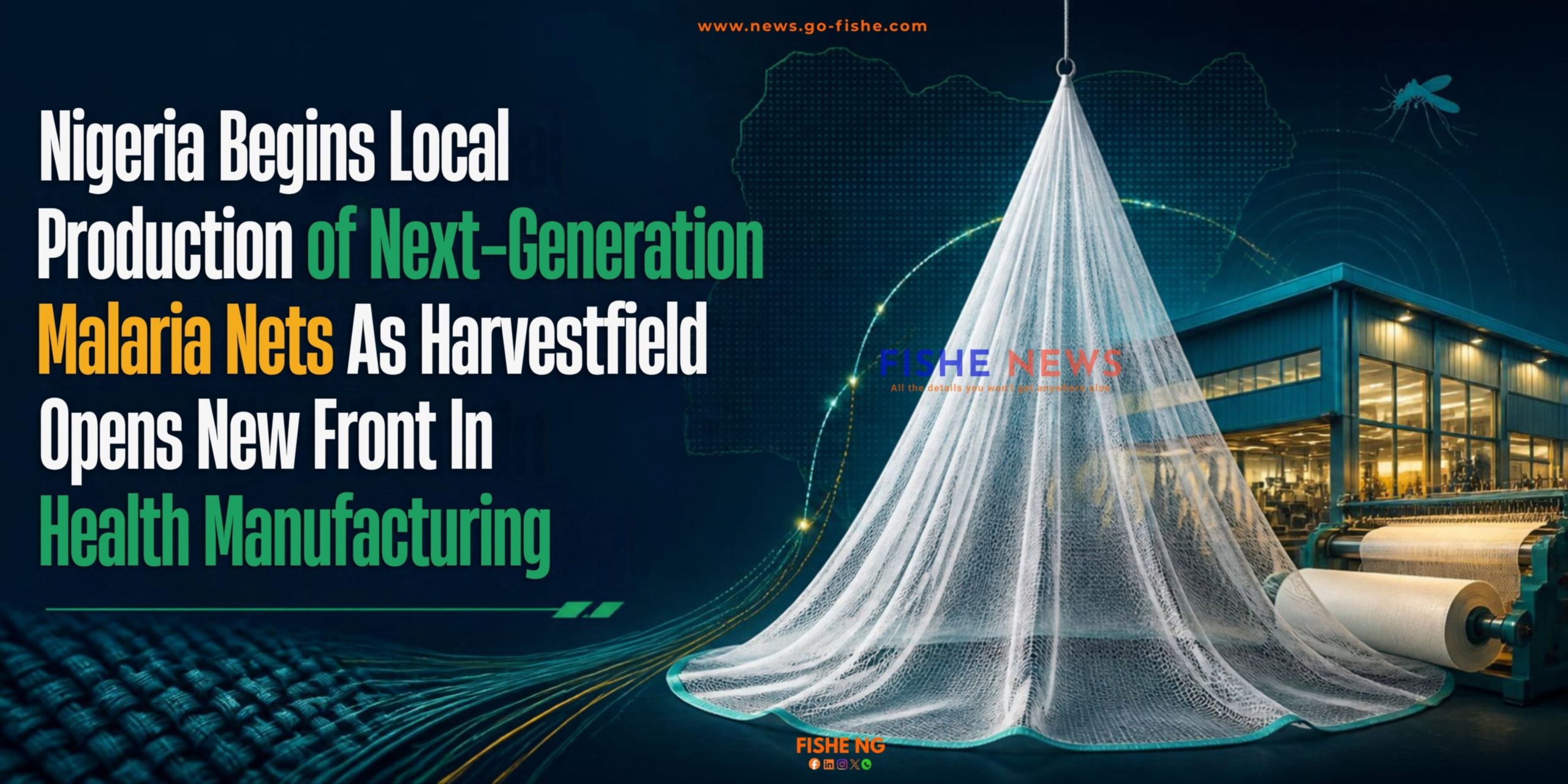
Harvestfield Healthcare FZE has kicked off the commercial production of Synera DuoForte, a long-lasting insecticidal net with dual active ingredients that has received prequalification from the WHO. This production is happening at their facility located in the Harvestfield Free Trade Zone in Ogun State.
The manufacturing process began on September 13, 2026, and the facility is already supplying nets for a World Bank-funded malaria program that spans 31 states.
This development represents a significant change in Nigeria’s approach to malaria control, shifting from mainly importing finished nets to building local capacity to produce this essential public health product to internationally recognised standards.


Moreover, it positions Nigeria among the countries that are developing local industrial capabilities for the next generation of malaria interventions, especially as insecticide resistance increasingly influences how malaria programs distribute mosquito nets.
From Importing Nets To Making Them
The Harvestfield facility proudly stands as Nigeria’s first fully Nigerian-owned manufacturing operation dedicated to producing dual-active-ingredient long-lasting insecticidal nets, specifically of the pyrethroid-chlorfenapyr variety.
In collaboration with GDM Health Products, Harvestfield is responsible for the production of Synera DuoForte, a product that has been developed and is owned by GDM.
This innovative technology tackles a significant challenge faced by traditional insecticide-treated nets.
Typically, these nets depend heavily on pyrethroid insecticides. However, in many regions of Nigeria, mosquito populations have developed resistance to pyrethroids, which diminishes the effectiveness of these nets, even though they still serve as a physical barrier.
Synera DuoForte takes a different approach by combining a pyrethroid with chlorfenapyr, an insecticide that works through a unique mode of action. The World Health Organization endorses this type of dual-active-ingredient net in areas where pyrethroid resistance is prevalent.
Given that Nigeria bears one of the largest malaria burdens in the world, the significance of this product goes far beyond its immediate use.
“GDM is excited to partner strategically with Harvestfield to introduce Synera DuoForte to Nigeria, the country facing the highest global malaria burden, and to support the prequalification of Harvestfield’s manufacturing facility in Ogun State for producing Synera DuoForte,” stated Jon Bastow, a representative from GDM Health Products.
A Factory Built For A National Health Challenge
Synera DuoForte has received prequalification from WHO, with GDM Health Products overseeing this important certification. Notably, Harvestfield’s Ogun State facility is recognised as an approved manufacturing site under this prequalification.
This facility also boasts certification from National Agency for Food and Drug Administration and Control (NAFDAC) and holds ISO certification, ensuring it meets the necessary quality and regulatory standards to produce products for national malaria programs and other health initiatives.

Professor Muhammad Ali Pate, the Coordinating Minister of Health and Social Welfare, highlighted this investment as a key part of the larger strategy to enhance Nigeria’s domestic health manufacturing capabilities.
“Establishing the ability to produce our own health products is vital for Nigeria’s health security. A facility based in Nigeria that manufactures next-generation insecticide-treated nets to international standards and is already supplying programs across thirty-one states exemplifies the kind of capacity the Renewed Hope agenda aims to develop,” Professor Pate remarked.
For Harvestfield, this factory marks a significant milestone in a partnership with Nigeria’s malaria control efforts that has spanned over twenty years.
The Harvestfield Group has been active in Nigeria’s vector control sector for 26 years, distributing more than 42 million insecticide-treated nets throughout all 36 states. Since 2018, the group has also been the exclusive national distribution partner for WHO-prequalified nets.
Now, the company is taking a step further up the value chain.
The Supply-chain Argument
Shifting from distribution to manufacturing could really shake up the economics and responsiveness of Nigeria’s insecticide-treated net supply chain.
When we rely on imported nets, we’re at the mercy of international production schedules and shipping timelines, which can mean waiting around 45 to 60 days just for ocean freight.
On the flip side, local production offers a promising alternative: making these nets closer to the programs and communities that actually need them.
This is especially important as malaria-control programs adapt to new patterns of insecticide resistance and changing product needs.
Dr. Abdul Mukhtar from the Presidential Initiative for Unlocking the Healthcare Value Chain (PVAC), emphasizes that the real value of this investment goes beyond just setting up another factory. It’s about building a Nigerian production base that can meet international standards.
“PVAC is all about transitioning Nigeria from being an importer of health products to becoming a manufacturer. It’s not just about having a factory; it’s crucial that it meets the standards that international buyers expect and can operate on a national scale. A facility in Nigeria that can achieve both is exactly what this initiative aims to make happen,” Dr. Mukhtar explained.
Beyond Mosquito Nets
The Ogun State facility is being set up to be much more than just a one-product factory.
By establishing this facility, we’re not only creating local expertise in manufacturing, technical operations, quality assurance, and regulatory compliance, but we’re also laying the groundwork for producing a wider range of health products down the line.
For Harvestfield, the manufacturing of insecticide-treated nets is just the first step in a broader vision to enhance healthcare manufacturing capabilities right here in Nigeria.
This development aligns perfectly with the Federal Government’s goal to lessen reliance on imported health products and to bolster the domestic healthcare value chain through initiatives like the Renewed Hope health agenda, the Presidential Initiative for Unlocking the Healthcare Value Chain (PVAC), and the Nigeria First procurement policy.
In practical terms, the Ogun factory signifies a meaningful shift in Nigeria’s fight against malaria: what was once primarily imported can now be produced locally.
With the facility already supplying programs across 31 states, the transition from being an importer to a manufacturer is no longer just a dream—it’s now a reality in commercial production.
May Nigeria succeed.