
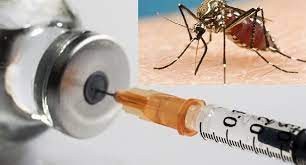
Ghana on Thursday said it is the first country in the world to approve a new malaria vaccine from Oxford University, with children under the age of three-years-old in line to benefit.
The mosquito-borne disease kills more than 600,000 people each year, most of them children in Africa, and scientists have been trying for years to develop vaccines.
It is unclear when the Oxford vaccine will be rolled out in Ghana.
Childhood vaccines in Africa are typically paid for by international organisations such as Gavi and UNICEF after they have been backed by the World Health Organisation (WHO), which is still assessing the vaccine’s safety and effectiveness.

However, Oxford scientist, Adrian Hill said Ghana’s drug regulator has approved it for the age group at highest risk of death from malaria, children aged 5 months to 36 months.
It has a deal with Serum Institute of India to produce up to 200 million doses annually.
This is the first time a major vaccine has been approved first in an African country ahead of rich nations, Hill said.
It was unusual that a regulatory authority in Africa had reviewed the data quicker than the WHO, he added.
“Particularly since COVID, African regulators have been taking a much more proactive stance, they’ve been saying…we don’t want to be last in the queue,’’ Hill said.
The first malaria vaccine, Mosquirix from British drugmaker GSK (GSK.L), was endorsed by the WHO in 2022 after decades of work.
However, lack of funding and commercial potential thwarted the company’s capacity to produce as many dose as needed.
GSK has committed to produce up to 15 million doses of Mosquirix every year through 2028, well under the roughly 100 million doses a year of the four-dose vaccine the WHO says is needed long-term to cover around 25 million children.
Ghana, Kenya and Malawi were all involved in the pilot programme for the roll-out of Mosquirix, and have begun rolling it out more widely in recent months.
Since it began in 2019, 1.2 million children across the three countries have received at least one dose of the vaccine.
Meanwhile, the WHO said in march that in the areas where the vaccine has been given, all-cause child mortality has dropped by 10 per cent, a sign of its impact.
Mid-stage data from the Oxford vaccine trial involving more than 400 young children was published in a medical journal in September.
While the vaccine effectiveness was 80 per cent in the group that received a higher dose of the immune-boosting adjuvant component of the vaccine, and 70 per cent in the lower-dose adjuvant group, at 12 months following the fourth dose.
The doses were administered ahead of the of peak malaria season in Burkina Faso.
Data from an ongoing phase III clinical trial in Burkina Faso, Kenya, Mali and Tanzania that has enrolled 4,800 children is expected to be published in a medical journal in the coming months.
However, late-stage data, which suggests a similar vaccine performance as in the phase II trial has been shared with regulatory authorities over the last six months, Hill said.
