
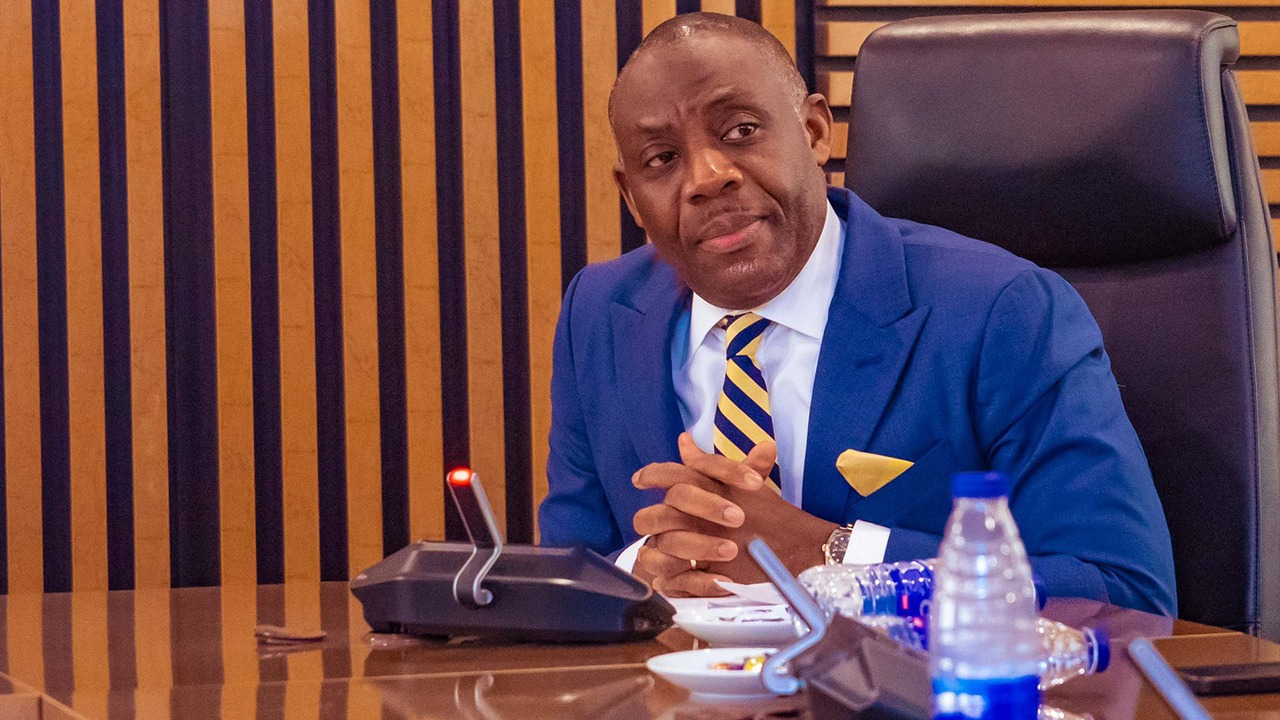
The Federal Government of Nigeria (FG), has announced a significant reversal of its education language policy — deciding to abandon the use of indigenous/mother-tongue instruction and instead make English the medium of teaching from pre-primary through tertiary education.
Background
In 2022 the government approved a new national language policy (the National Language Policy, or NLP), which stipulated that children from early childhood or pre-primary up to Primary Six should be taught in their mother tongue or the language of the immediate community, with English introduced later.
This policy corresponded with the earlier national education framework (the National Policy on Education, NPE), which recommended the language of immediate environment as medium at early years.
What’s the Change?
The Education Minister, Dr. Tunji Alausa, announced at the 2025 Language in Education International Conference, Abuja (organised by the British Council), that the policy has been cancelled and English will now serve as the medium of instruction across all levels of schooling — from pre-primary, through primary, junior secondary, senior secondary to tertiary.

He cited a nationwide review of data which, according to him, shows that students taught primarily in indigenous languages recorded higher failure rates in national exams (e.g., West African Examinations Council — WAEC, National Examinations Council — NECO, and Joint Admissions and Matriculation Board — JAMB), and had weaker English comprehension skills.
Additionally, the minister of state for education, Suwaiba Ahmed, noted that the government is rolling out a new teacher-training package focused on literacy and numeracy for foundational levels (pre-primary to primary one-three).
Why the Government Did This
-
A key reason given: Poor performance in national examinations in regions where the mother-tongue instruction policy was heavily used.
-
The logistical and implementation hurdles of teaching in numerous indigenous languages with varying dialects, teacher readiness, material availability etc were implied in the minister’s remarks.
-
The decision is framed as “evidence-based governance”: the government says it will prioritise what the data says works rather than what is rooted purely in cultural or emotional appeals.
Concerns & Criticism
Not everyone is convinced this is the right move. Language and education experts are raising red flags. For example, Anthony Otaigbe (CEO of Izesan Ltd), described the policy reversal as a “step backwards” for Nigeria’s education system.
Critiques Include:
-
The reversal contradicts long-standing research that children learn more effectively in their first language at early stages.
-
It conflicts with previous policy statements and international guidance that early education in mother tongue boosts literacy and comprehension.
-
It may widen inequalities: children in multilingual or minority-language communities may struggle more if instruction shifts to English prematurely.
-
Implementation and teacher capacity: the government previously faced challenges in rolling out the mother-tongue policy (materials, teachers, languages), and critics say moving to English only does not automatically fix foundational teaching or resources.
Implications
-
The shift will require schools to revise curricula, teacher training, instructional materials and assessment frameworks to reflect English-only instruction.
-
Regions or states that had already adopted mother-tongue instruction may need to adjust or reverse those measures, which could create disruption.
-
Indigenous languages, while not banned from being taught as subjects, may lose prominence as languages of instruction — raising questions about cultural preservation and linguistic diversity.
-
The emphasis now is on strengthening literacy and numeracy in English, given the perceived link between English proficiency and national/international competitiveness.
-
The decision signals that the government prioritises “global competitiveness” and standardisation over local-language education models, at least for the moment.
Final Thoughts
This policy shift by the federal government in education is bold, and it underscores a persistent tension in multilingual countries: balancing linguistic/cultural identity with educational outcomes and global integration.
Whether the decision will yield the improved learning outcomes cited by the government remains to be seen. Success will depend not only on language of instruction, but also on how well teacher training, curriculum quality, materials, assessment, and school infrastructure are implemented and supported.
For parents, teachers and stakeholders, major questions loom: How quickly will schools make the transition? What happens to children who are still more comfortable in their mother tongue? Will indigenous languages still be actively supported? And ultimately: will this lead to improved literacy, numeracy and national exam outcomes?
