Close Menu
  • Home
  • Entertainment
  • National
  • International
  • Tech
  • Politics
  • Sports
  • PMNI
  • More
    • Business
    • Culture
    • Education
    • History
    • Health
  • Featured
    • Fishe Travel
    • Fishe Media
    • Fishe TV
Facebook X (Twitter) Instagram
FISHE NEWS
  • Home
  • Entertainment
  • National
  • International
  • Tech
  • Politics
  • Sports
  • PMNI
  • More
    • Business
    • Culture
    • Education
    • History
    • Health
  • Featured
    • Fishe Travel
    • Fishe Media
    • Fishe TV
Facebook X (Twitter) Instagram
FISHE NEWS
Home»Technology»China’s Chip Ambitions: A Long Road To Catching Up With Nvidia
Technology

China’s Chip Ambitions: A Long Road To Catching Up With Nvidia

Omolemi EboisetaleBy Omolemi EboisetaleOctober 6, 2025Updated:October 7, 2025No Comments3 Mins Read
Facebook Twitter Pinterest LinkedIn Tumblr Email
Share
Facebook Twitter LinkedIn Pinterest Email

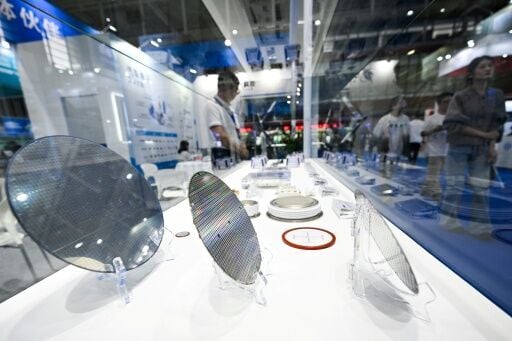
China’s push to develop top-end artificial intelligence microchips is gaining momentum, but analysts say it will struggle to match the technical might of US powerhouse Nvidia within the current decade.

The US has imposed restrictions on exporting advanced chips used to power AI systems to China, citing national security concerns. This move has led China to ramp up its chip industry, with companies like Huawei and Cambricon making significant strides.

China wants chips that policy cannot take away, said Stephen Wu, a former AI software engineer and founder of the Carthage Capital investment fund. However, “full end-to-end parity with Nvidia’s best chips, memory packaging, networking, and software is not guaranteed” by 2030 or even beyond, Wu added. To catch up with Nvidia, China needs to make fast progress on high-bandwidth memory and packaging, which are “the hardest and most complex parts of the chip”, Wu said.

These chips are extremely advanced and tiny, so imagine carving a stone sculpture with a hammer instead of a chisel, Wu explained. Other challenges include building the right software to harness the chips’ power and upgrading manufacturing tools. Nvidia chips are still “the best… to train large language models”, the systems behind generative AI, said Chen Cheng, general manager for AI translation software at tech firm iFLYTEK. Faced with US restrictions, “we overcame that difficulty” by shifting to Chinese-made tech, she said.



The industry consensus is China at least needs five to ten years to catch up, said George Chen of The Asia Group, a view reflected by Dilin Wu, research strategist at Pepperstone. “The future is bright, but not yet,” she said. “It’s maybe a 2030 story”, as “significant gaps remain in terms of performance, and also in terms of energy efficiency and ecosystem maturity”. Public demand for AI services is booming in China, and while government support for new chips is “substantial”, the investment required is “immense”, she added.

Shares in Alibaba, the e-commerce titan ploughing billions of dollars into AI tech, have more than doubled since January. Chinese chip industry leader Huawei will reportedly double output of its top Ascend 910C chip in the next year. The hype has also sharply driven up stocks in the smaller chipmaker Cambricon, sometimes dubbed “China’s Nvidia”. “I think this rally can be sustained”, partly because it is driven by Chinese government policy, Pepperstone’s Wu said.

Nvidia boss Jensen Huang has warned that restrictions on exporting his most cutting-edge semiconductors to China will only fuel the country’s rise. “They’re nanoseconds behind us,” the leather jacket-clad Huang said on a tech business podcast. “So we’ve got to go compete.” Meanwhile, Nvidia is under pressure from both sides, with Beijing barring major Chinese firms from buying a state-of-the-art Nvidia processor made especially for the country, and the company paying 15 percent of revenue from certain AI chip sales in China to the US government.

#ArtificialIntelligence #Xiaomi AI microchips. Alibaba China Chip Huawei Industry Nvidia Production rivalry semiconductors Tech US-China
Share. Facebook Twitter Pinterest LinkedIn Tumblr Email
Omolemi Eboisetale
  • Website

Related Posts

Nigeria’s Data Needs To Return Home. But Is Our Infrastructure Up To The Task?

October 4, 2026

Nigeria Begins Local Production Of Next-Generation Malaria Nets As Harvestfield Opens New Front In Health Manufacturing

October 2, 2026

From Appropriation To Impact: What The 2025 Budget Extension Means For Citizens

October 1, 2026

Comments are closed.

Here is spotlighting many benefits of journeying with either Lagos State’s Blueline or Redline rails for a hassle-free day, week, month and year. Thank God for the Igbega Eko. Together we rise.
https://youtu.be/V67GV8wgyjw

Latest Posts

  • BREAKING IN THE NEWS: Several Feared Dead As Helicopter Crashes In Igbokoda, Ondo State
  • 100 Days To Nigeria’s 2027 Election: The Ballot, The Battle And The Burden
  • Nigeria’s Data Needs To Return Home. But Is Our Infrastructure Up To The Task?
  • Nigeria Begins Local Production Of Next-Generation Malaria Nets As Harvestfield Opens New Front In Health Manufacturing
  • From Appropriation To Impact: What The 2025 Budget Extension Means For Citizens

LATEST POSTS

BREAKING IN THE NEWS: Several Feared Dead As Helicopter Crashes In Igbokoda, Ondo State

October 5, 2026

100 Days To Nigeria’s 2027 Election: The Ballot, The Battle And The Burden

October 5, 2026

Nigeria’s Data Needs To Return Home. But Is Our Infrastructure Up To The Task?

October 4, 2026

Nigeria Begins Local Production Of Next-Generation Malaria Nets As Harvestfield Opens New Front In Health Manufacturing

October 2, 2026

From Appropriation To Impact: What The 2025 Budget Extension Means For Citizens

October 1, 2026

Subscribe to Updates

Get the latest news from FISHE about politics, economy, health and business, etc

Facebook X (Twitter) Instagram Pinterest
© 2026 ThemeSphere. Designed by ThemeSphere.

Type above and press Enter to search. Press Esc to cancel.