
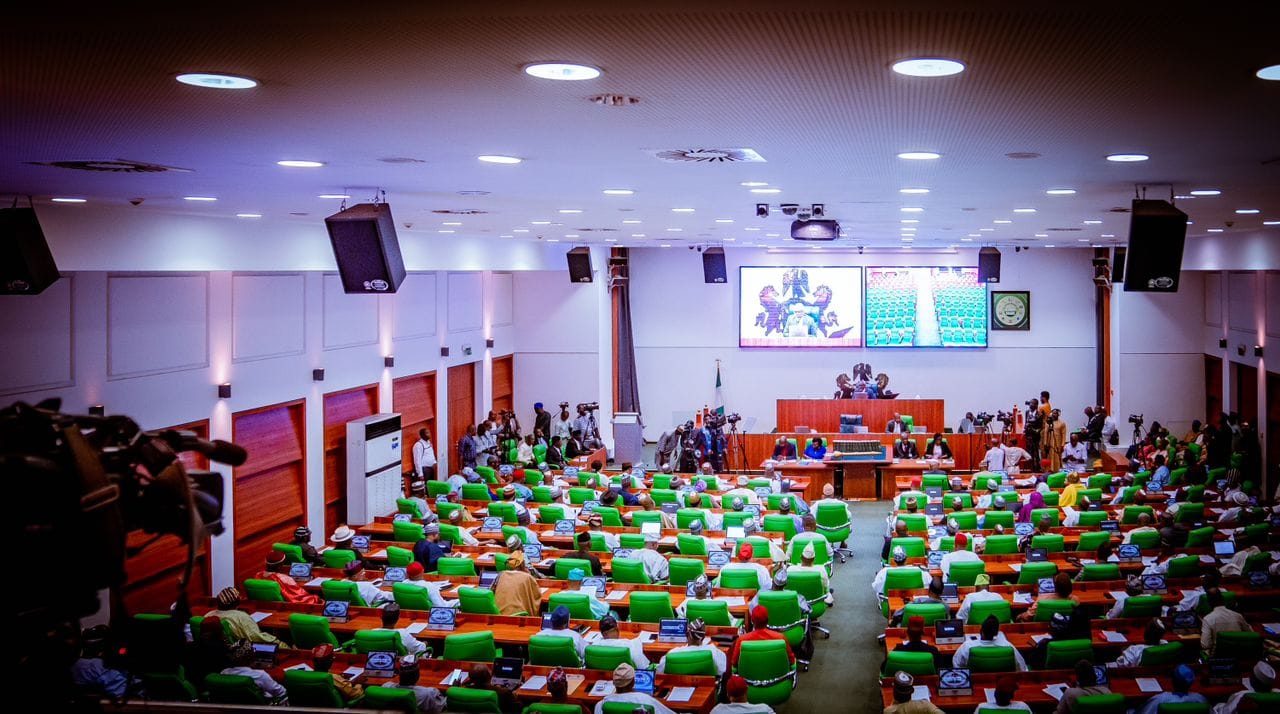
Nigerian House Of Representatives Approves Amended Tax Reform Bills Amid Public Opposition.
The Nigerian House of Representatives has approved significant amendments to the four tax reform bills submitted by President Bola Tinubu, despite growing opposition from labour unions and civil society groups. The amended bills aim to overhaul Nigeria’s tax system, improve revenue collection, and ensure a more efficient tax structure.
The tax reform bills—Nigeria Tax Bill, Nigeria Tax Administration Bill, Nigeria Revenue Service Establishment Bill, and Joint Revenue Board Establishment Bill—have sparked nationwide debate. Although the initial proposals were modified, critics argue that several provisions will further burden ordinary Nigerians.

Key Amendments and Controversies
Nigeria currently has one of the world’s lowest tax-to-GDP ratios at 10.8 per cent, forcing the government to rely on borrowing. In response, President Tinubu has ended costly energy subsidies, devalued the naira twice, and now shifted focus to tax reforms.
One of the most contentious proposals sought to increase Value-Added Tax (VAT) from 7.5 per cent to 15 per cent by 2030. However, lawmakers rejected the planned increase, opting to maintain VAT at 7.5 per cent. Additionally, minimum wage earners were exempted from income tax to provide relief to low-income workers.
Other major amendments include a revised VAT distribution formula, with 50 per cent allocated equally among states, 20 per cent based on population, and 30 per cent according to consumption levels. This formula aligns with recommendations from the Nigerian Governors’ Forum (NGF).
The House also introduced strict penalties for tax-related offences, including a fine of ₦2 million and a maximum jail term of three years for individuals or corporations attempting to bribe tax officials.
Restrictions on Tax Waivers and Government Powers
A crucial change in the bill is the restriction of the President’s and Governors’ powers to grant tax waivers. Any exemptions must now receive approval from the National Assembly or State Houses of Assembly. Similarly, the Accountant-General of the Federation must seek legislative approval before deducting unremitted revenue from government agencies.
Concerns over the reintroduction of inheritance tax were also addressed, with lawmakers clarifying that income from inherited assets before distribution will not be taxed.
Additionally, military personnel salaries were exempted from income tax, acknowledging their sacrifices. Agencies such as the Tertiary Education Trust Fund (TETFUND), National Information Technology Development Agency (NITDA), and National Agency for Science and Engineering Infrastructure (NASENI) will continue receiving funding from the development levy fund.
New Tax Compliance Measures and Digital Tax Filing
The approved amendments introduce stricter tax compliance measures while providing relief for small businesses. The timeframe for issuing Taxpayer Identification Numbers (TINs) was extended from two to five working days.
A major shift in tax collection is the introduction of real-time VAT reporting, requiring businesses to file tax returns instantly if the necessary technology is available. The Nigeria Tax Administration Bill mandates the use of an Electronic Fiscal System (EFS) for automated tax recording and submission.
Another key provision requires banks to report transactions exceeding ₦50 million for individuals and ₦250 million for companies.
The Nigeria Revenue Service (NRS), which will replace the Federal Inland Revenue Service (FIRS), will now have a governing board with representatives from all six geopolitical zones and each of the 36 states and the Federal Capital Territory (FCT). The NRS must also obtain a court order before seizing taxpayers’ assets.
Labour Unions and Civil Society Groups Reject Key Provisions
Despite these amendments, trade unions and civil society organisations have rejected several aspects of the bills. At a symposium in Lagos, the Campaign for Democratic and Workers’ Rights (CDWR) condemned the proposed tax changes, arguing that they would worsen economic hardship.
Among the major concerns is the potential scrapping of TETFUND, which activists claim will cripple tertiary education funding. Labour groups also strongly opposed the proposed VAT increase, warning that it would escalate Nigeria’s cost-of-living crisis and disproportionately affect low-income earners.
Representatives from trade unions, including the Nigeria Labour Congress (NLC) and Trade Union Congress (TUC), demanded greater transparency in tax fund management and called for union representation in tax-related agencies.
A tax expert, Lanre Akinola, criticised Section 77 of the Nigeria Tax Administration Bill, warning that it could widen economic disparities between states. “The ruling elite is obsessed with imposing taxes on ordinary Nigerians while failing to invest in social programmes, infrastructure, and job creation,” Akinola stated.
Next Steps
The amended tax reform bills will proceed to a third reading in the House of Representatives before final approval. Chairman of the House Committee on Finance, James Faleke, expressed confidence that the reforms would be widely accepted.
“These bills went through extensive public hearings, with input from over 80 stakeholders. We have done a thorough job, and I believe the amended laws will benefit all Nigerians,” Faleke stated.
As the debate over Nigeria’s tax future continues, the government faces growing pressure to balance revenue generation with economic relief for its citizens.
