
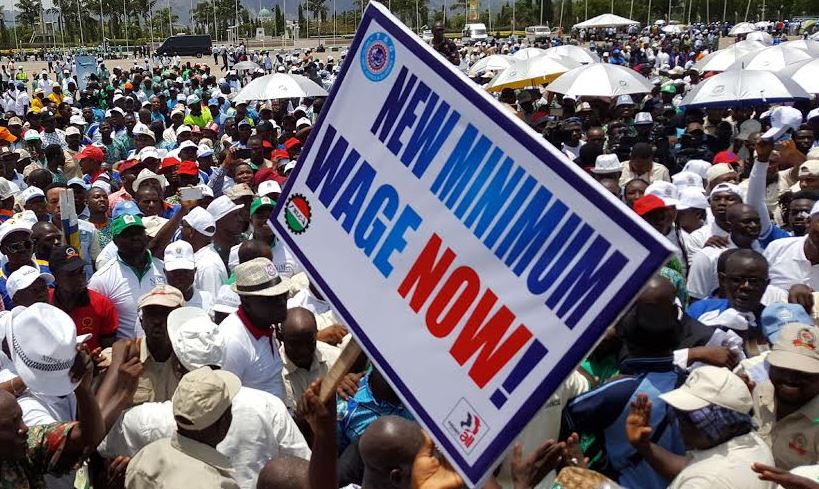
On Sunday, the Presidency emphasized that the demand for a N250,000 minimum wage by Organized Labour is unsustainable, warning that the Federal Government cannot allocate all its resources to meet such a demand.
This statement follows concerns raised by the Association of Local Governments of Nigeria (ALGON) regarding the proposed N62,000 minimum wage, which they believe could strain the financial capacities of local councils.
Negotiations between the Federal Government and Organized Labour broke down on Tuesday, May 28, after the government and the Organized Private Sector increased their offer to N62,000. However, labour unions criticized this proposal as an insult to the average Nigerian worker, who they argue deserves significantly more.
In an exclusive interview with The PUNCH, Bayo Onanuga, Special Adviser to President Bola Tinubu on Information and Strategy, stated that the Nigeria Labour Congress and the Trade Union Congress should consider the broader population’s needs. He argued that the government cannot use all its resources to pay workers, who constitute less than 10% of the population, while many others are self-employed or work in the private sector.

Onanuga explained, “The government cannot use all its resources to pay workers. They have other things to do. The workers we are even talking about are not up to 10% of the population. Many people are self-employed or engaged in the private sector, who are not members of Labour, and are not affected by this demand.”
He urged labour to reconsider their stance instead of attempting to shut down the system. The current minimum wage proposal of N62,000 was reached through consultations with the private sector and other stakeholders, but labour remains opposed.
Tinubu announced during Democracy Day that an executive bill on the new national minimum wage would be sent to the National Assembly. While Onanuga could not specify a date, he anticipated it might happen after the Sallah break. He also indicated that further meetings with Labour leaders might not occur unless there are significant developments.
“I am not certain when he plans to do it (Bill). Maybe after Sallah. But I am not sure whether the FG is meeting with them or whether its position on the minimum wage has changed,” Onanuga added. He noted that the N62,000 figure was agreed upon by a committee including private sector representatives and sub-nationals, and that the government cannot decide on a different amount without their input.
Efforts to reach labour leaders on Sunday were unsuccessful as they were returning from the International Labour Organisation conference in Geneva.
Meanwhile, Bukar Aji, chairman of the tripartite committee established by the Federal Government to review the minimum wage, urged labour unions to reassess their demands. He highlighted several government incentives, including a N35,000 wage award for treasury-paid federal workers, various financial supports, and palliative loans to states.
Aji called on labour unions to consider accepting the N62,000 minimum wage offer to avoid further job losses, particularly as many businesses are already struggling.
