
The Nigerian Presidency has responded to a recent New York Times article that criticized the country’s economic situation as the worst in a generation.
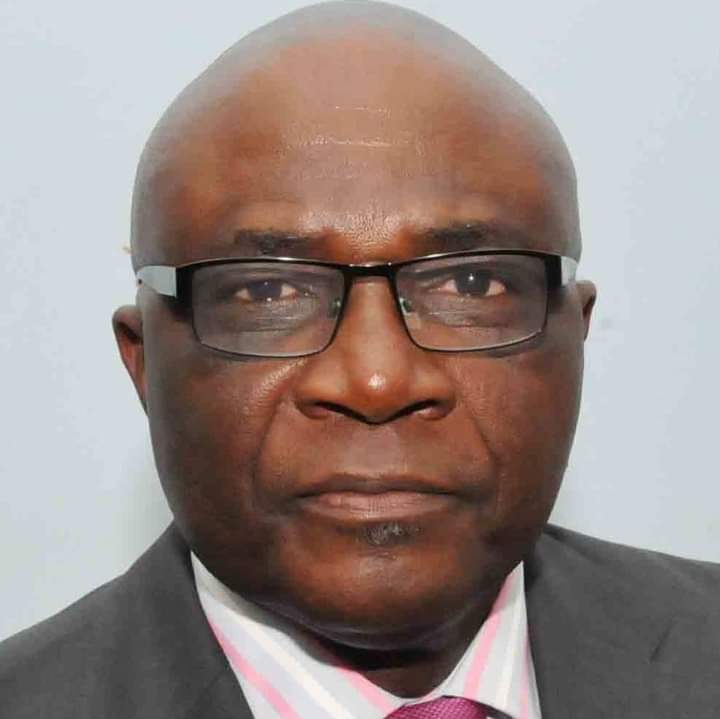
The article, written by Ruth Maclean and Ismail Auwal and published on June 11, prompted a reaction from Bayo Onanuga, the Special Adviser to the President on Information and Strategy.
Onanuga dismissed the report as a typical example of how foreign media often portray African countries in a negative light. He argued that the report misrepresented the economic policies of President Bola Tinubu’s administration, which took office in late May 2023.
Onanuga emphasised that the article focused solely on the negative aspects of Nigeria’s economy while ignoring the positive measures being implemented by the central and state governments. He clarified that President Tinubu inherited significant economic challenges that were not of his making. According to Onanuga, a respected economist described the economy Tinubu inherited as “dead,” requiring urgent intervention to avoid a situation similar to Zimbabwe and Venezuela.

He highlighted the policy decisions made by the Tinubu administration, including the removal of the fuel subsidy and the unification of multiple exchange rates. Onanuga noted that the fuel subsidy, which cost the public treasury $84.39 billion between 2005 and 2022, was unsustainable given Nigeria’s infrastructure needs and social service demands. Additionally, the state oil firm NNPCL had accumulated significant debt due to the subsidy payments.
When Tinubu assumed office, the national budget had no provision for fuel subsidy payments beyond June 2023, with 97% of revenue earmarked for debt servicing. The previous government had resorted to borrowing to cover expenses, while also subsidising the exchange rate at an estimated cost of $1.5 billion monthly.
To address these financial issues, Tinubu’s administration ended the fuel subsidy and floated the naira. Although the naira initially depreciated to as low as N1,900 to the US dollar, Onanuga noted that some stability had been restored, with the exchange rate now below N1,500 to the dollar. He projected that the naira could appreciate to between N1,000 and N1,200 by the end of the year.
Onanuga cited a trade surplus of N6.52 trillion in Q1 2023 and increased investor confidence as indicators of economic improvement. He mentioned significant loans from the World Bank, AfDB, and Afreximbank as further evidence of restored confidence in Nigeria’s economy.
The inflation rate, particularly food inflation, remains a challenge, but the government is taking steps to address it. Increased agricultural production and initiatives by state governments, such as setting up retail shops to sell food items at lower prices, are among the measures being implemented. The administration’s investment in dry-season farming and incentives for farmers are also aimed at boosting food production and reducing costs.
Onanuga acknowledged that the rising cost of living is a global issue, affecting countries like the USA and those in Europe. He expressed confidence that Nigeria would overcome its current economic difficulties, drawing on the country’s resilience in facing past challenges.
In conclusion, Onanuga assured that the Tinubu administration is working diligently to resolve Nigeria’s economic issues, with a focus on long-term stability and growth.
