
After watching and listening to the Lagos Gubernatorial Debate several times, and reflecting on it carefully, I feel compelled to make one observation: elections aren’t always about choosing between personalities or political parties. Some reach beyond individual ambitions. They shape the direction, priorities, and future of an entire state.
The 2027 Lagos State Governorship Election is one such defining moment. It calls for a deeper conversation about leadership, governance, policy, accountability, and the kind of Lagos we want to build together.
Lagos cannot afford political experimentation for its own sake. As Nigeria’s commercial hub, it is a sprawling metropolis of millions, with a complex transport system, a vast economy and development challenges that call for more than polished speeches, attractive manifestos or campaign promises.
The state needs competence, a firm grasp of its institutions and sound administrative judgment. Above all, it needs a governor who knows that running Lagos is no place to learn on the job.

At the November 8, 2026, governorship debate organised by the Nigeria Debate Consortium, four leading contenders made their case to Lagos voters: Dr. Obafemi Hamzat of the All Progressives Congress (APC), Gbadebo Rhodes-Vivour of the African Democratic Congress (ADC), Funso Doherty of the Nigeria Democratic Congress (NDC), and Deji Doherty of the Peoples Democratic Party (PDP).
Each candidate brought a distinct political identity, a vision for development and a promise to build a better Lagos.
But beyond the campaign rhetoric, one question matters most: Who is ready to take charge of the Lagos State government from day one?
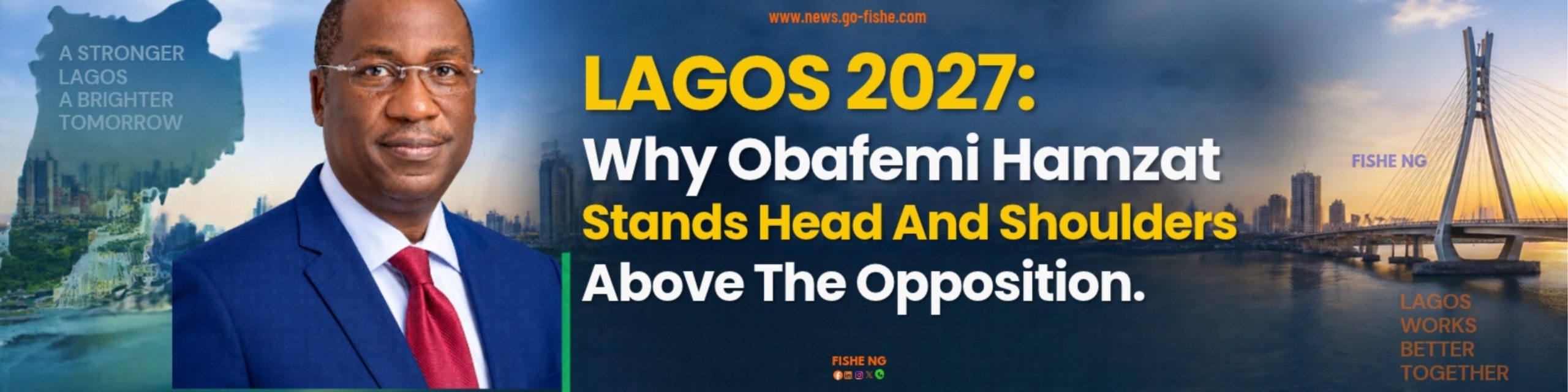
My answer is clear: Obafemi Hamzat has the strongest overall case.
That is not to dismiss what the opposition candidates could contribute, suggest that the APC administration is beyond criticism, or deny Lagosians their right to demand accountability. It is because Hamzat brings together an unusually strong mix of institutional knowledge, technical expertise, administrative experience and leadership continuity.
In a state as complex as Lagos, those are not small advantages. They are essential qualifications.
The Hamzat Advantage: Experience Is Not A Campaign Slogan
One of the biggest mistakes voters can make is mistaking political popularity for the ability to govern.
Getting applause at a rally is one thing. Running a multibillion-naira state economy, overseeing ministries, coordinating infrastructure projects, supporting security partnerships and making decisions that affect millions of people is quite another.
Hamzat’s greatest political advantage is his first-hand understanding of how Lagos government works.
As Deputy Governor, he has served at the centre of the state’s executive administration. That experience gives him an institutional understanding that campaign preparations alone cannot provide.
He knows the complexity of the state’s development priorities, how its institutions relate to one another, what effective public administration demands and why long-term projects need careful coordination.
The governorship is no classroom. Lagos cannot afford a governor who spends the first year learning how the machinery of government works.
Hamzat offers something valuable: the prospect of continuity, with room to improve.
His task, then, is not simply to inherit the administration. It is to build on its successes, move effective projects forward, address what is falling short and make government more responsive.
That is the difference between using continuity as an excuse and treating it as a strategy for development.
Rhodes-Vivour: The Appeal Of Change Must Meet The Test Of Governance
Gbadebo Rhodes-Vivour has made a strong case for a different approach to development.
His focus on affordable housing, environmental management, decentralisation and a Lagos that works for ordinary residents speaks to real public concerns. His criticism of the political establishment also reflects frustrations that deserve to be taken seriously.
Still, an appealing vision doesn’t automatically mean it can be delivered. That’s the question Lagosians need to consider.
Rhodes-Vivour’s plan to build 100,000 housing units in four years is ambitious. To make it happen, the government would need to manage land effectively, secure financing, coordinate infrastructure, build up construction capacity and establish a sustainable way to deliver the homes.
Lagos needs ambition, but it also needs a track record of getting things done.
Hamzat’s advantage is his direct experience with the institutions and administrative processes required to put programmes like this into practice.
The debate shouldn’t be about whether change is needed. It is. The more important question is whether the proposed changes can be delivered without undermining the economic and infrastructure systems millions of Lagos residents rely on.
Rhodes-Vivour has laid out his case for an alternative. Hamzat makes a stronger case for managing the transition from current government programmes to the next phase of development.
Funso Doherty: Accountability Is Important, But Delivery Is The Ultimate Test
Funso Doherty’s political message focuses heavily on accountability, transparency in the public sector, education, housing and reforming public transportation.
These are all important issues.
His plans to expand affordable housing and provide free public education show that he understands the financial pressures ordinary families in Lagos face.
But governing Lagos takes more than pointing out what’s wrong. It takes the ability to bring together institutions, budgets, staff and implementation partners to get things done.
Take the promise of 150,000 housing units. To be convincing, it needs a clear funding model, available land, realistic construction timelines and a credible plan for delivery.
Free education, too, needs proper funding, qualified teachers, adequate classrooms and a sustainable way to handle growing enrolment.
Hamzat’s strongest argument against Doherty isn’t that accountability matters less. It’s that accountability must go hand in hand with administrative skill and the ability to deliver.
A Hamzat administration should, in fact, commit to even stronger transparency: publish clear performance targets and make public spending easier for residents to examine.
Experience should raise expectations, not shield anyone from criticism.
Deji Doherty: Economic Ideas Must Be Translated Into An Executable Government Programme
Deji Doherty has also raised economic concerns, from electricity costs and taxation to debt servicing and the conditions facing professionals and businesses.
These are real issues in a state where economic competitiveness depends on affordable energy, dependable infrastructure and a productive workforce.
But governing means coordinating many policy areas at once.
Electricity costs, for example, cannot be brought down through declarations alone. That takes investment, regulatory coordination, careful infrastructure planning and arrangements that can remain commercially viable.
Tax relief, too, must be weighed against the state’s responsibility to fund healthcare, education, roads, sanitation and other essential services.
Hamzat’s strength lies in his broad experience with the state’s administrative and development priorities.
He has worked within the executive structure tasked with balancing revenue generation, public spending and infrastructure investment.
Deji Doherty may bring a different economic perspective, but Hamzat has a more established track record of turning policy aims into government action.
Why Hamzat’s Lagos Promise Deserves Serious Attention
Perhaps one of the most important moments in the debate was Hamzat’s presentation of his development blueprint, branded The Lagos Promise – (Ileri Eko), structured around seven pillars and 100 pledges.
This is significant because Lagos requires an administration that understands development as an interconnected system.
Transportation affects employment. Housing affects productivity. Education affects economic competitiveness. Healthcare affects household income. Environmental management affects public health and investment.
A governor cannot successfully address these issues as isolated political talking points.
Hamzat’s proposals reflect this broader approach.
On transportation, his emphasis on integrating rail, road and water transportation is particularly relevant. The future of Lagos mobility cannot depend entirely on expanding road infrastructure while millions of commuters remain trapped in congestion.
The expansion of rail services, procurement of between 3,000 and 4,000 compressed natural gas buses and development of water transportation represent an approach that recognises the need for multiple transportation options.
On healthcare, his proposed expansion of Maternal and Child Centres from 10 to 15, upgrading of 100 primary healthcare centres and expansion of Ilera Eko health insurance coverage demonstrate an understanding that healthcare must reach beyond major hospitals.
On environmental management, his proposed 95 per cent waste collection coverage and investment in waste-to-energy infrastructure point towards a more ambitious approach to the state’s sanitation challenges.
On housing, his emphasis on mortgage financing and enforcement of existing tenancy protections addresses issues that have placed enormous pressure on working families.
These proposals are not a substitute for delivery. They must be measured against timelines, budgets and actual outcomes. But they demonstrate the advantage of a candidate presenting a programme connected to the realities of governing a complex metropolitan state.
The Most Important Question: Who Can Keep Lagos Moving?
Lagos is a remarkable economic powerhouse, but the challenges facing the city are just as immense.
Every day, residents deal with gridlocked roads, unaffordable rents, flooding, poor waste management, rising costs and unequal access to public services.
Businesses need reliable infrastructure. Young people need decent job prospects. Families need homes they can afford. Communities need schools and healthcare facilities that work.
The next governor must recognise that Lagos is more than Victoria Island, Ikoyi, Lekki or Ikeja.
It is also Badagry, Epe, Ikorodu, Lagos Island, Agege, Alimosho, Mushin, Ajegunle and countless other communities whose residents expect government to make daily life better.
This is where Hamzat’s experience matters.
A governor must be able to work across the state, understand the different challenges each area faces and direct resources towards growth that benefits everyone.
The job also calls for strong partnerships with businesses, federal institutions, local governments and development organisations.
Hamzat’s experience within government gives him a significant advantage in building those relationships.
The opposition may promise a different political path, but Lagos needs a leader who can preserve stability while remaining open to reform.
That is the opportunity Hamzat must seize.
Why Hamzat Beats The Opposition On The Overall Governance Question
The case for Hamzat rests on five key advantages:
First, institutional experience. He has worked in the state’s executive administration and understands how government operates.
Second, continuity in development. Lagos has major infrastructure and social programmes already underway. They need consistent attention, completion and improvement, not disruption for its own sake.
Third, technical and administrative insight. Governing Lagos is complex. The job calls for someone who understands how to implement policy, coordinate infrastructure projects and bring government institutions together.
Fourth, a joined-up development plan. His seven-pillar, 100-pledge blueprint offers a framework for tackling transportation, housing, healthcare, environmental management and economic growth as connected priorities.
Fifth, readiness to lead. Lagos cannot afford a long learning curve at the top. Hamzat’s years in the executive give him a valuable head start.
Taken together, these strengths make him, in my view, the strongest overall contender among the four candidates.
That said, experience should not be used to defend every decision made by the current administration. Lagosians have every right to demand answers on traffic, flooding, housing costs, sanitation and the rising cost of living.
Hamzat’s strongest case will be showing that he has learned from the government’s shortcomings and is ready to lead a more effective administration.
Hamzat Must Be More Than A Candidate Of Continuity
There is one critical point that deserves emphasis.
Lagos doesn’t simply need another administration promising to continue ongoing projects. It needs a government that knows what must change and has the resolve to do things differently.
Hamzat must show that he can take Lagos’s development to the next level.
He must make affordable housing a reality for ordinary workers, not leave it as a policy promise.
He must tackle flooding with better drainage maintenance, responsible urban planning and stronger environmental enforcement.
He must improve waste collection and ensure contractors are held accountable for the services they provide.
He must make public transportation more accessible, reliable and affordable.
He must ensure that public spending leads to visible improvements in residents’ lives.
Most importantly, he must build a government that measures success by results, not political loyalty.
This is his opportunity to turn experience into a legacy of tangible, measurable progress.
The Verdict: Lagos Needs A Governor Who Can Hit The Ground Running
The 2027 governorship contest is about more than choosing a political party. It’s a decision that will shape Lagos over the next four years, and well beyond.
Rhodes-Vivour has offered an alternative vision. Funso Doherty has focused on accountability and social investment, while Deji Doherty has put important economic questions on the table.
Those contributions deserve to be taken seriously.
But if the key question is who brings the strongest mix of institutional knowledge, executive experience, policy understanding and readiness to govern, Obafemi Hamzat stands out.
His candidacy offers a chance to pair continuity with reform, experience with fresh ideas, and a deep understanding of government with a more ambitious development agenda.
He doesn’t need to claim that every problem has been solved. No one could make that claim honestly.
What he does need to show is that he understands the challenges, knows which institutions must address them and has the leadership to deliver better results.
That’s a strong case.
Lagos deserves more than political theatre. It deserves competence, accountability, vision and the willingness to make tough decisions.
Among the four contenders at the November debate, Hamzat has the strongest overall credentials to take on that responsibility.
The question isn’t simply who can promise a better future for Lagos. It’s who is best prepared to govern the city as it is today while building the Lagos of tomorrow.
On experience, institutional readiness and the scope of his development programme, Obafemi Hamzat has made the strongest case.
Lagos needs a governor who understands the job. Hamzat’s biggest advantage is that he has already been in the room where many decisions are made. His next challenge is to show that he can turn those decisions into even better outcomes for every Lagosian.
