
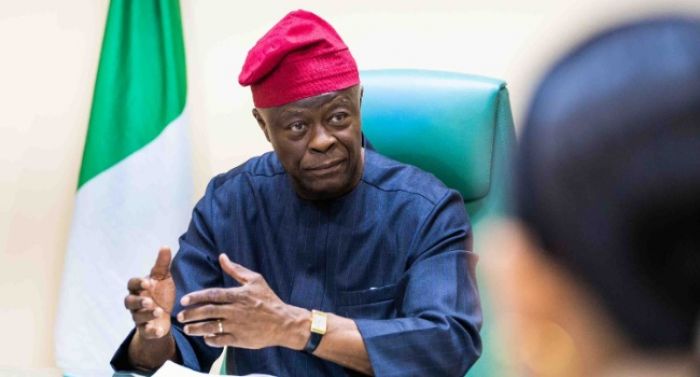
Nigeria’s Minister of Finance and Coordinating Minister of the Economy, Wale Edun, has reassured Nigerians and foreign investors that the economy is not in fiscal collapse, but rather undergoing a deliberate “correction” aimed at long-term sustainability. Speaking yesterday at a media briefing, Edun, emphasized that the current administration prioritises structural reforms, transparency, and fiscal discipline over short-term illusions of growth.
The clarification came amid widespread public discourse about Nigeria’s debt, revenue performance, and capital project execution, following Edun’s recent appearances before the National Assembly.
Understanding the Economic “Correction”
According to the Minister, an economic correction is a period of realignment where fiscal, monetary, and structural policies are adjusted to restore balance and sustainability.
“Recent trends do not indicate a fiscal collapse,” Edun said. “The economy is undergoing a correction to ensure that growth is sustainable and structural.”
He explained that this process involves:
-
Strengthening public finances through better revenue mobilisation and expenditure prioritisation.

-
Improving debt management to avoid unsustainable fiscal pressures.
-
Maintaining transparency and accountability in capital project implementation.
-
Promoting growth-enabling reforms that foster private sector development.
Edun’s statement aims to correct misconceptions in public discourse, particularly misunderstandings about federal revenue, debt service trends, and project execution.
Clarifying Revenue Misunderstandings
The Finance Ministry released a document titled “Deepening Public Understanding of Nigeria’s Fiscal Position”, which addressed common misconceptions.
One key point was the distinction between Federation Revenue and Federal Government Revenue:
-
Federation Revenue refers to all nationally collected revenue, which is deposited into the Federation Account.
-
Federal Government Revenue is the portion allocated to the central government through the Federation Account Allocation Committee (FAAC).
While the broad statutory sharing formula is often cited as 52.68% for the federal government, 26.72% for states, and 20.60% for local governments, the document clarified that each revenue source has its own allocation rules.
“Oil and gas shortfalls hit the federal government hardest because it receives a higher proportional allocation (53–65%), from these revenues. VAT, by contrast, is shared mostly with states and local governments (80%),” the brief stated.
Edun also highlighted the shortfall between projected and actual oil and Federation Revenue in 2024–2025:
-
Projected revenue: ₦37.4 trillion
-
Actual revenue: ₦7 trillion (19% performance)
-
Implication: The federal government missed out on approximately ₦15 trillion in potential revenue
Debt Service and Fiscal Discipline
Addressing concerns over debt, Edun argued that rising debt service does not indicate fiscal recklessness. He explained that increases in debt payments were primarily due to macro-economic factors such as naira depreciation and higher domestic interest rates, rather than uncontrolled borrowing.
-
2024: Budgeted debt service = ₦8.56 trillion; Actual = ₦12.63 trillion (+₦4 trillion)
-
2025: Budgeted = ₦13.12 trillion; Actual = ₦14.57 trillion (+₦1.45 trillion)
“Nigeria’s debt is not growing uncontrollably; it has grown in nominal naira terms, and service costs reflect economic realities rather than poor governance,” he stated.
Capital Project Implementation
Edun also clarified misconceptions about federal capital projects, stating that while under-execution exists, projects are far from abandoned. He explained that capital expenditure is divided into:
-
MDA-funded capital – managed by ministries, departments, and agencies
-
Multilateral-tied loans – disbursed directly by development partners
Performance figures:
-
2024: Total CAPEX = ₦11.59 trillion (84% execution)
-
2025: Total CAPEX = ₦11.7 trillion (76% execution)
The Minister emphasized that reports citing low MDA releases do not capture the full scope of capital expenditures.
Signs of Economic Improvement
On the same day, Minister of Agriculture and Food Security, Senator Abubakar Kyari reported that federal efforts to curb food inflation are yielding results:
-
Prices of essential food commodities have dropped by 50% nationwide
-
Measures included interventions in agriculture supply chains and subsidies for critical staples
Furthermore, the government reassured foreign investors that Nigeria’s business environment remains secure and conducive for investment, countering perceptions of heightened economic risk.
Structural Reforms Underway
Edun stressed that the current economic reforms are:
-
Structural – targeting fundamental weaknesses in fiscal and economic management
-
Transparency-driven – ensuring proper monitoring and accountability
-
Discipline-enforcing – fostering responsible revenue and debt management
-
Growth-enabling – supporting sectors that drive jobs and GDP growth
He concluded that public understanding of fiscal dynamics must distinguish between temporary corrections and systemic collapse, urging citizens and media to contextualize discussions about revenue, debt, and spending.
Implications for Nigerians
-
Short-term: Citizens may see continued fiscal consolidation, tighter budget prioritisation, and controlled subsidies.
-
Medium-term: Stabilisation of essential commodity prices, better revenue mobilisation, and stronger investor confidence.
-
Long-term: Sustainable growth, efficient capital project execution, and resilient public finances.
Conclusion
Finance Minister, Wale Edun, has framed the current economic situation not as a crisis but as a strategic correction aimed at long-term sustainability. Coupled with progress in controlling food inflation and reassuring investors, the government is signaling a path toward structural stability, fiscal discipline, and growth-oriented reforms.
By clarifying revenue allocations, debt realities, and capital project performance, the Ministry seeks to align public perception with economic realities, ensuring that discourse around Nigeria’s finances reflects facts rather than misconceptions.
