Close Menu
  • Home
  • Entertainment
  • National
  • International
  • Tech
  • Politics
  • Sports
  • PMNI
  • More
    • Business
    • Culture
    • Education
    • History
    • Health
  • Featured
    • Fishe Travel
    • Fishe Media
    • Fishe TV
Facebook X (Twitter) Instagram
FISHE NEWS
  • Home
  • Entertainment
  • National
  • International
  • Tech
  • Politics
  • Sports
  • PMNI
  • More
    • Business
    • Culture
    • Education
    • History
    • Health
  • Featured
    • Fishe Travel
    • Fishe Media
    • Fishe TV
Facebook X (Twitter) Instagram
FISHE NEWS
Home»Business»Lagos Charts Plan For Power Infrastructure Optimisation Under Decentralised System
Business

Lagos Charts Plan For Power Infrastructure Optimisation Under Decentralised System

Omolemi EboisetaleBy Omolemi EboisetaleNovember 21, 2025No Comments2 Mins Read
Facebook Twitter Pinterest LinkedIn Tumblr Email
Share
Facebook Twitter LinkedIn Pinterest Email

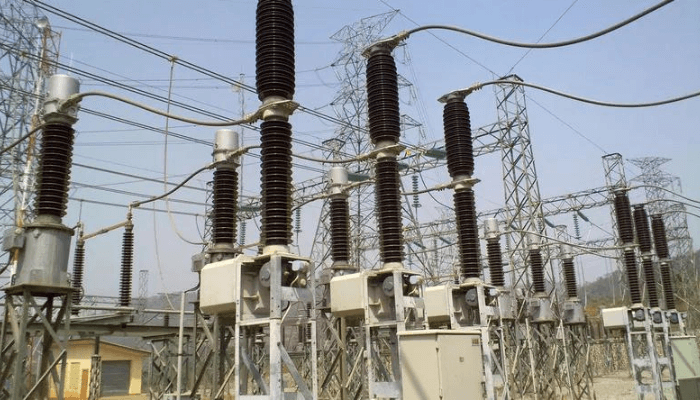
The Lagos State Government, in collaboration with the organised private sector, has outlined a joint strategy to strengthen electricity supply as Nigeria’s power market undergoes decentralisation under the Electricity Act.

The initiative was discussed during the Lagos Chamber of Commerce and Industry (LCCI) Power Sector Conference, where stakeholders highlighted both the opportunities and challenges presented by the reforms.

Officials at the conference noted that while the decentralised market structure allows for state-led solutions, it has also revealed persistent weaknesses in the power value chain that continue to undermine efficiency. Biodun Ogunleye, Lagos Commissioner for Energy and Mineral Resources, represented by Chief Technical Officer Ogunade Hamed, stated that the state is implementing a decentralised market structure anchored on the Lagos Electricity Law, the Lagos State Electricity Regulatory Commission (LASERC), and the Integrated Resource Plan.

Ogunleye emphasised that Lagos is focusing on infrastructure renewal, commercial sustainability, and coordinated regulation to build a power market capable of supporting industrial growth. “We cannot deliver reliability on infrastructure designed for a smaller population and an entirely different economy,” he said, noting that the grid must evolve to meet the state’s growing economic and demographic demands.



The commissioner highlighted ongoing initiatives, including solar retrofits for 42,000 streetlights, promotion of embedded generation in industrial clusters, and regulatory frameworks for mini-grids and hybrid energy systems. He also called for stronger collaboration among operators, investors, and regulators, stressing that the sector must break free from outdated practices to achieve meaningful progress.

Gabriel Idahosa, LCCI President and Chairman of Council, noted that decentralisation offers a unique chance to redesign the power sector for efficiency but warned of significant risks if regulatory frameworks and investor confidence are not harmonised. He listed persistent challenges such as unstable gas supply, limited generation, weak transmission, and fragile distribution networks as barriers that must be addressed to deliver tangible outcomes.

Also speaking, Olufemi Bakare, Chairman of the LCCI Power Group, stressed that Nigeria is at a critical point in its energy transition. He noted that while reforms have encouraged private sector participation, infrastructure deficits and regulatory inconsistencies remain key obstacles. “Infrastructure optimisation is now an indispensable priority if Nigeria is to unlock generation, transmission and distribution capacity,” he said, underscoring the importance of the joint strategy for a reliable and sustainable power system.

Decentralisation Electricity Lagos LCCI Power Sector
Share. Facebook Twitter Pinterest LinkedIn Tumblr Email
Omolemi Eboisetale
  • Website

Related Posts

Nigeria’s Data Needs To Return Home. But Is Our Infrastructure Up To The Task?

October 4, 2026

Nigeria Begins Local Production Of Next-Generation Malaria Nets As Harvestfield Opens New Front In Health Manufacturing

October 2, 2026

From Appropriation To Impact: What The 2025 Budget Extension Means For Citizens

October 1, 2026

Comments are closed.

Here is spotlighting many benefits of journeying with either Lagos State’s Blueline or Redline rails for a hassle-free day, week, month and year. Thank God for the Igbega Eko. Together we rise.
https://youtu.be/V67GV8wgyjw

Latest Posts

  • BREAKING IN THE NEWS: Several Feared Dead As Helicopter Crashes In Igbokoda, Ondo State
  • 100 Days To Nigeria’s 2027 Election: The Ballot, The Battle And The Burden
  • Nigeria’s Data Needs To Return Home. But Is Our Infrastructure Up To The Task?
  • Nigeria Begins Local Production Of Next-Generation Malaria Nets As Harvestfield Opens New Front In Health Manufacturing
  • From Appropriation To Impact: What The 2025 Budget Extension Means For Citizens

LATEST POSTS

BREAKING IN THE NEWS: Several Feared Dead As Helicopter Crashes In Igbokoda, Ondo State

October 5, 2026

100 Days To Nigeria’s 2027 Election: The Ballot, The Battle And The Burden

October 5, 2026

Nigeria’s Data Needs To Return Home. But Is Our Infrastructure Up To The Task?

October 4, 2026

Nigeria Begins Local Production Of Next-Generation Malaria Nets As Harvestfield Opens New Front In Health Manufacturing

October 2, 2026

From Appropriation To Impact: What The 2025 Budget Extension Means For Citizens

October 1, 2026

Subscribe to Updates

Get the latest news from FISHE about politics, economy, health and business, etc

Facebook X (Twitter) Instagram Pinterest
© 2026 ThemeSphere. Designed by ThemeSphere.

Type above and press Enter to search. Press Esc to cancel.